
The A-Level Revision Checklist
Turn a 60-page specification into a list of finishable jobs with this A-Level revision checklist.
The hardest part of A-Level revision is not the work — it is knowing what to work on. With three or four subjects, each with a specification running to dozens of pages, "revise Chemistry" is not a task you can start. A checklist turns that fog into a list of small, finishable jobs.
Here is how to build one, what to put on it, and how to use it right through to study leave.
Step 1: Get the Right Specification
Download the specification for each subject from your exam board's website — AQA, Edexcel (Pearson), OCR, WJEC/Eduqas or CIE. Make sure you have the right board and the right subject code; teachers can confirm both. Using the wrong one is the single most wasteful mistake in A-Level revision, and it happens every year. See A-Level Exam Boards Explained if you are unsure which you sit.
Step 2: Break It Into Topic-Sized Chunks
A specification bullet point is often too big for one session. Split each into chunks you could genuinely revise in 45 minutes. For example, "kinetics" might become:
- rate equations and orders of reaction
- rate-determining step
- Arrhenius equation and calculations
- required practical: measuring rates
You now have four tickable items instead of one intimidating heading.
Step 3: Traffic-Light Everything
Go through the whole list and mark each chunk:
- Green — I could answer an exam question on this right now.
- Amber — I understand it but would need my notes.
- Red — I could not start.
Be honest. An optimistic checklist is worse than no checklist, because it hides exactly the topics that will cost you marks.
Step 4: Add the Skills, Not Just the Content
A-Level marks are lost as often on technique as on knowledge. Add a short skills section per subject:
- command words and what each requires
- required practicals or set texts
- formulae you must memorise versus those given in the data booklet
- the mark scheme structure for extended answers
- timing per mark in the exam
Read How A-Levels Are Marked to see why these skills carry so much weight.
Step 5: Turn Reds Into Flashcards First
Every red topic should become a small deck of cards: definitions, mechanisms, key studies, formulae, worked steps. Once the cards exist, the topic moves from "terrifying" to "ten minutes a day". Cramoo can turn a photo of your class notes into a deck in seconds, so making cards stops being the excuse for not starting.
Step 6: Add a Past-Paper Column
Next to each topic, add space for three ticks: one for making the cards, one for reviewing them a week later, and one for completing past-paper questions on that topic. A topic is only genuinely green when all three are ticked.
A Sample Checklist Layout
| Topic | Confidence | Cards made | Reviewed | Past-paper Qs |
|---|---|---|---|---|
| Rate equations | Red | ✔ | ||
| Le Chatelier | Amber | ✔ | ✔ | |
| Bonding and structure | Green | ✔ | ✔ | ✔ |
Four columns is enough. Any more and you will spend more time maintaining the checklist than revising.
Step 7: Review It Weekly
Every Sunday, spend five minutes updating confidence levels. You are looking for movement — reds becoming ambers, ambers becoming greens. If nothing has moved in a week, your sessions are too passive: you are probably rereading rather than testing yourself. Our guide to how to revise for A-Level exams covers the fix.
Study Leave Checklist
In the final ten days before each paper, switch to a short, exam-focused list:
- Read the exam board's specimen paper and mark scheme once more.
- Review every red and amber card from that subject.
- Complete one full timed paper and mark it properly.
- Write out the formulae and definitions you must know from memory.
- Check the date, time, room, and what equipment you need — see A-Level Exam Dates 2026.
- Pack: black pens, pencil, ruler, calculator (checked batteries), clear water bottle, ID if required.
Subject Checklist Starters
-
Maths: every topic in the spec, plus one whole paper per week from Easter. Start at the A-Level Maths hub.
-
Biology, Chemistry, Physics: definitions word-perfect, all required practicals, all data-analysis skills. See Biology, Chemistry, Physics.
-
Psychology: studies, evaluation points, research methods, and issues and debates — see Psychology.
-
Economics: diagrams drawn from memory, definitions, and current real-world examples — see Economics.
-
English Literature: quotations per text, critical readings, and context — see English Literature.
Why Checklists Work
They externalise the plan, so you are not spending willpower deciding what to do. They make progress visible, which sustains motivation through the long middle stretch of Year 13. And they guarantee coverage — no topic quietly gets skipped because it never came up in a lesson you enjoyed.
Start Now
Pick one subject. Download the specification, chunk the first unit, traffic-light it, and make cards for your first red topic tonight. That is a complete, useful revision session, and you will have a working checklist before the end of it.
Frequently asked questions
Related reading
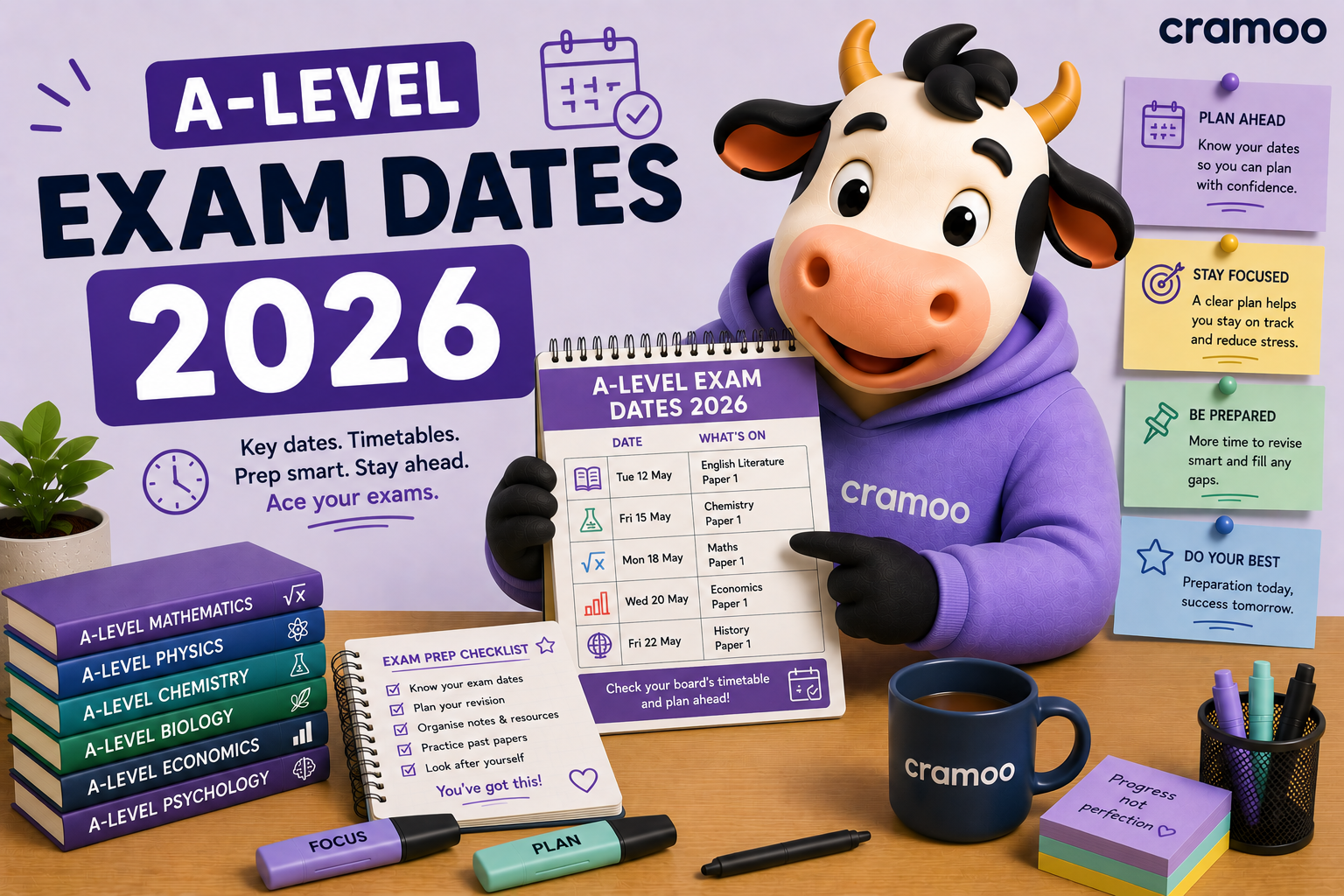
A-Level Exam Dates 2026
A-Level exams in 2026 are expected to run from mid-May to late June, with Results Day on Thursday 13 August 2026.
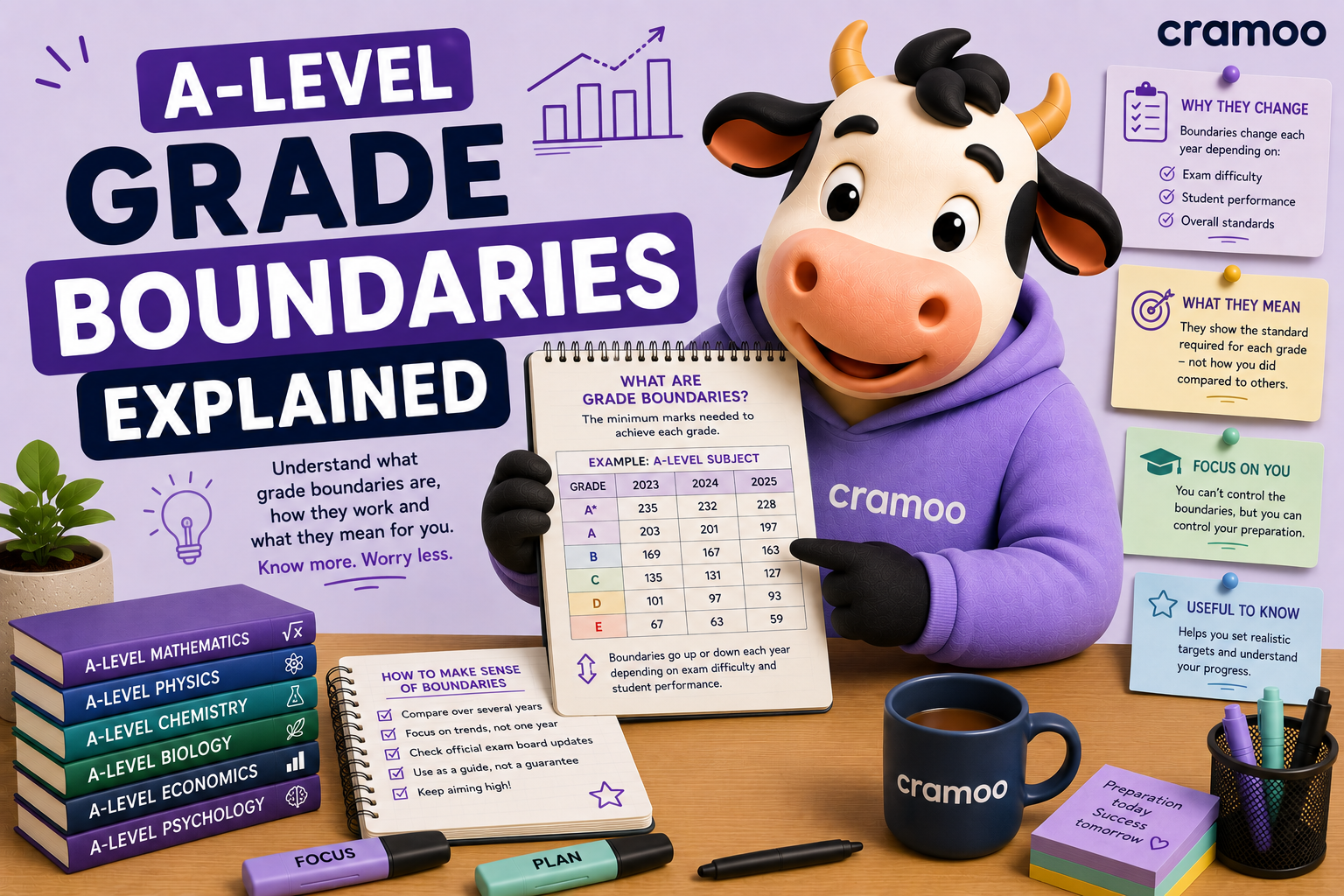
A-Level Grade Boundaries Explained
Why there is no fixed percentage for an A*, how boundaries are set each year, and how to use them when marking past papers.
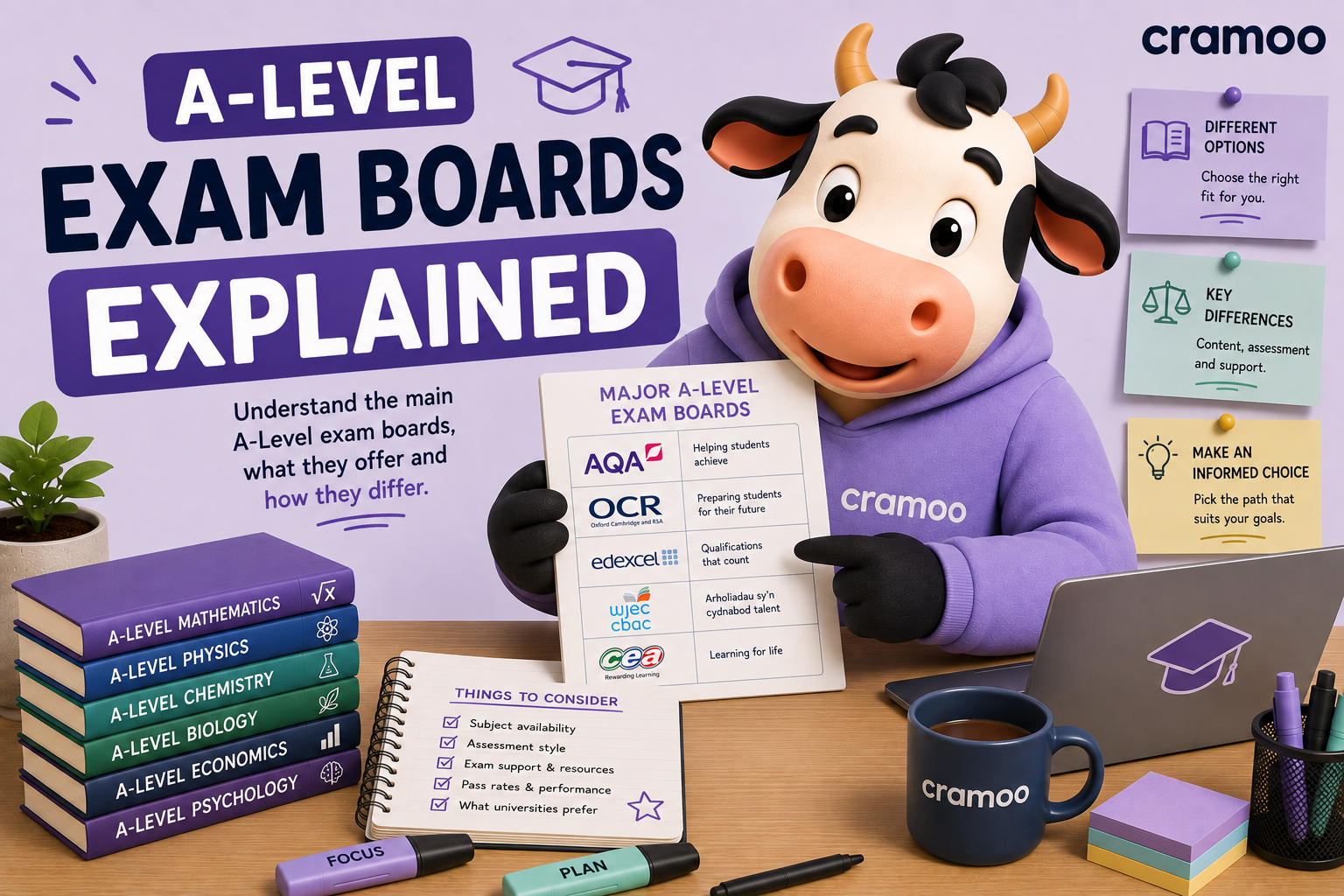
A-Level Exam Boards Explained
Which board you sit changes your specification, papers and mark schemes. Here is how to find out and why it matters.
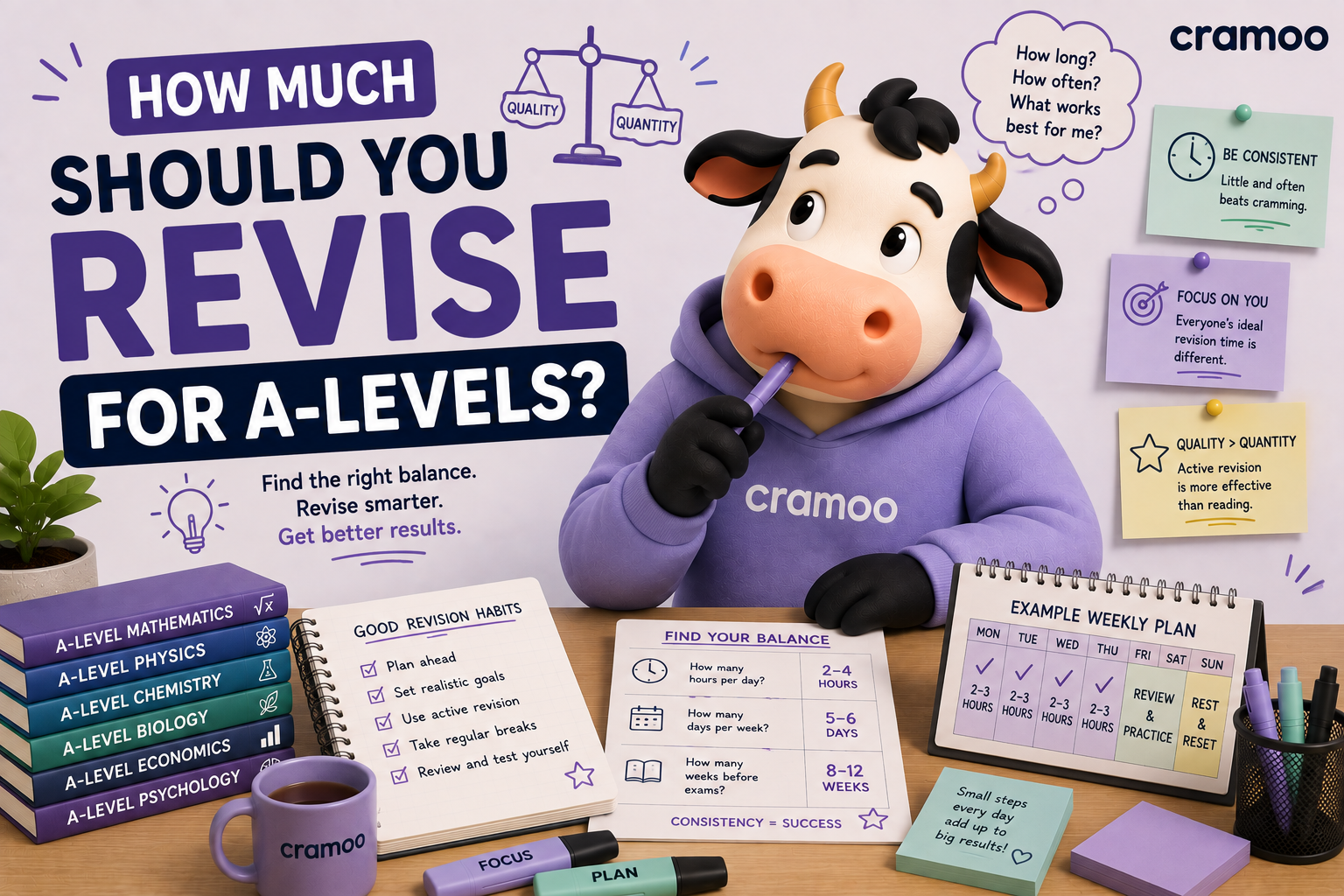
How Much Should You Revise for A-Levels?
How many hours of A-Level revision you actually need per day in term time, the holidays and study leave.