
A-Level Exam Dates 2026
A-Level exams in 2026 are expected to run from mid-May to late June, with Results Day on Thursday 13 August 2026.
A-Level exams in England, Wales and Northern Ireland in 2026 are expected to run from Monday 11 May to Friday 26 June 2026, with Results Day on Thursday 13 August 2026. Every exam board publishes its own timetable within that window, so your personal schedule depends on which subjects and which board you sit.
Here is what to expect, how to build your own timetable, and what to do with the dates once you have them.
The 2026 A-Level Exam Window
- Main exam period: early May to late June 2026.
- Contingency day: the exam boards reserve a date at the end of the series (usually the final Wednesday) in case of national disruption. You must remain available until the end of the window even if your last exam is earlier.
- Results Day: Thursday 13 August 2026 for A-Levels and AS-Levels. GCSE results follow the week after.
Most subjects have two or three papers, typically spaced several days apart, and the sciences, maths and the most popular humanities are usually scheduled in the earlier weeks.
Where to Find Your Exact Dates
- Your school or college. Every candidate gets a personalised statement of entry listing each paper, its date, start time, duration, and seat number. This is the definitive document — check it carefully for clashes and errors as soon as you get it.
- Your exam board's published timetable. AQA, Pearson Edexcel, OCR, WJEC/Eduqas and CIE all publish provisional and final timetables on their websites, searchable by subject code. Confirm which board you sit first — see A-Level Exam Boards Explained.
Never revise to a timetable you found on a forum. Codes change, and papers move.
Morning and Afternoon Sessions
Exams are scheduled in two sessions: morning papers usually start at 9:00am and afternoon papers at 1:30pm. Practising at the same time of day as your paper is a small, free advantage — if your Chemistry paper is at 9:00am, do your timed practice at 9:00am rather than at 10:00pm.
Watch for Clashes and Long Gaps
Two situations are worth flagging to your exams officer early:
- Clashes: two papers timetabled in the same session. Schools handle this under exam board rules, usually by sitting one paper immediately after the other under supervision.
- Back-to-back days: three papers in three days is common and needs planning. Front-load that content in your revision so those days are review only.
Map every date onto one calendar and highlight the tightest week. That week dictates your revision priorities for the whole of April.
Planning Backwards From Your First Paper
Once you have your dates, work backwards:
- Eight weeks out: finish first-pass coverage of every topic; flashcards made for everything.
- Six weeks out: switch to timed past-paper questions by topic.
- Three weeks out: full timed papers, one per subject per week.
- Final ten days: flashcard review, formulae, and specimen papers only — no new content.
Our A-Level Revision Timetable guide turns this into a week-by-week plan, and the A-Level Revision Checklist helps you confirm nothing has been skipped.
Practical Exam-Day Checklist
- Statement of entry and photo ID if your centre requires it.
- Two black ballpoint pens, pencil, sharpener, eraser, ruler.
- Scientific or graphical calculator with fresh batteries and no case.
- Clear water bottle with no label.
- Watch left at home — smartwatches are not permitted in the exam hall.
- Arrive at least 30 minutes early; late arrivals are stressful and sometimes penalised.
After the Exams: Results and Appeals
Results are released to candidates on Thursday 13 August 2026. UCAS Track updates on the morning of results day, and Clearing opens the same day for anyone who needs a different route.
If a grade looks wrong, you can ask your centre to request a review of marking. There are strict deadlines — usually a few weeks after results day — and a grade can go down as well as up, so speak to your teacher before requesting one. For background on how those marks were produced, read How A-Levels Are Marked and A-Level Grade Boundaries Explained.
Making the Dates Work For You
Print the timetable, put it on the wall, and count the study days between each paper. Those gaps are the real currency of exam season: two free days between Biology Paper 1 and Paper 2 is enough to review an entire unit if you already have flashcards ready.
Start building those decks now — Cramoo turns a photo of your notes into a review-ready deck, so the gaps between papers become genuinely useful.
For more guides, visit the A-Level hub.
Dates above reflect the published exam windows for summer 2026. Always confirm against your personal statement of entry and your exam board's final timetable.
Frequently asked questions
Related reading
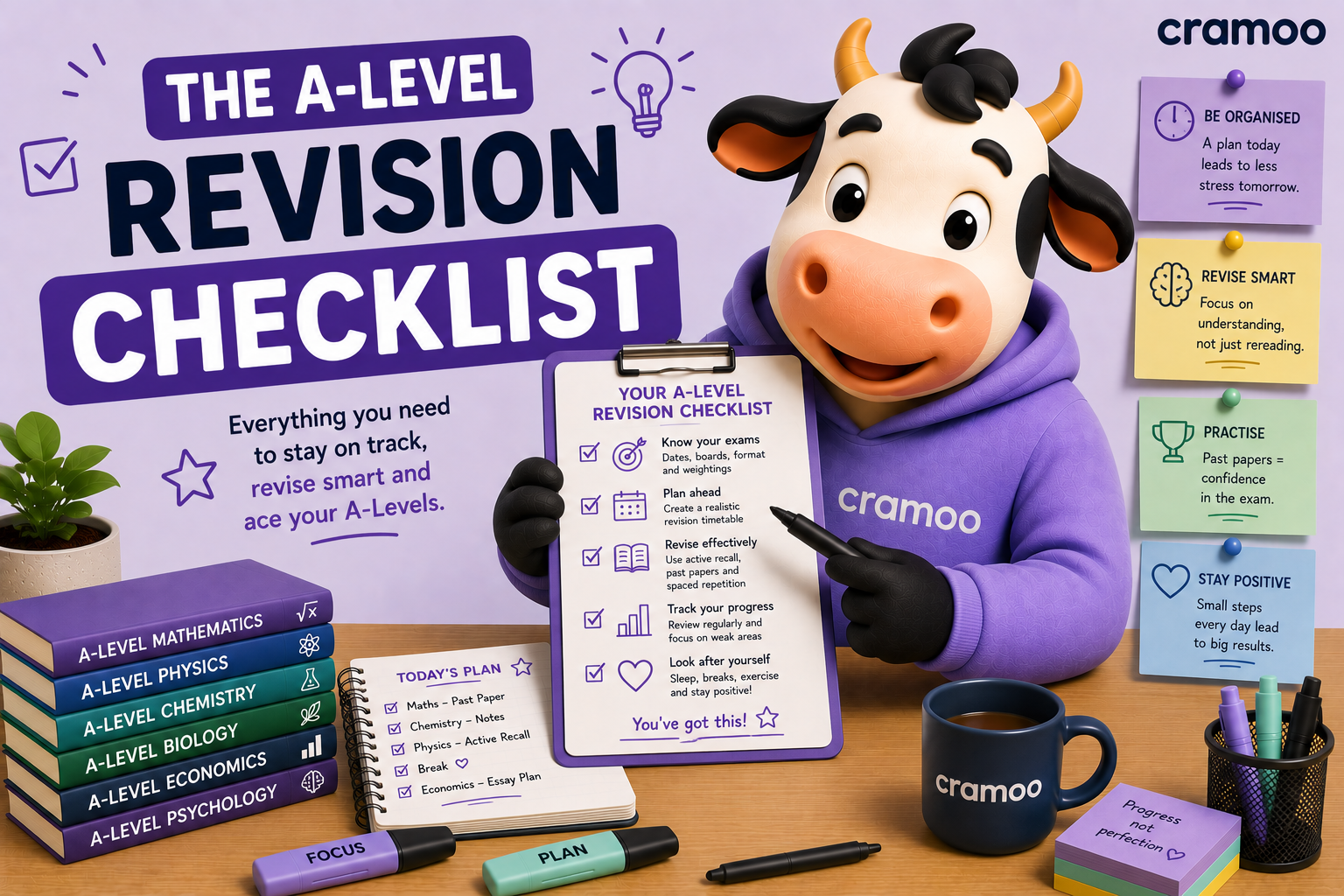
The A-Level Revision Checklist
Turn a 60-page specification into a list of finishable jobs with this A-Level revision checklist.
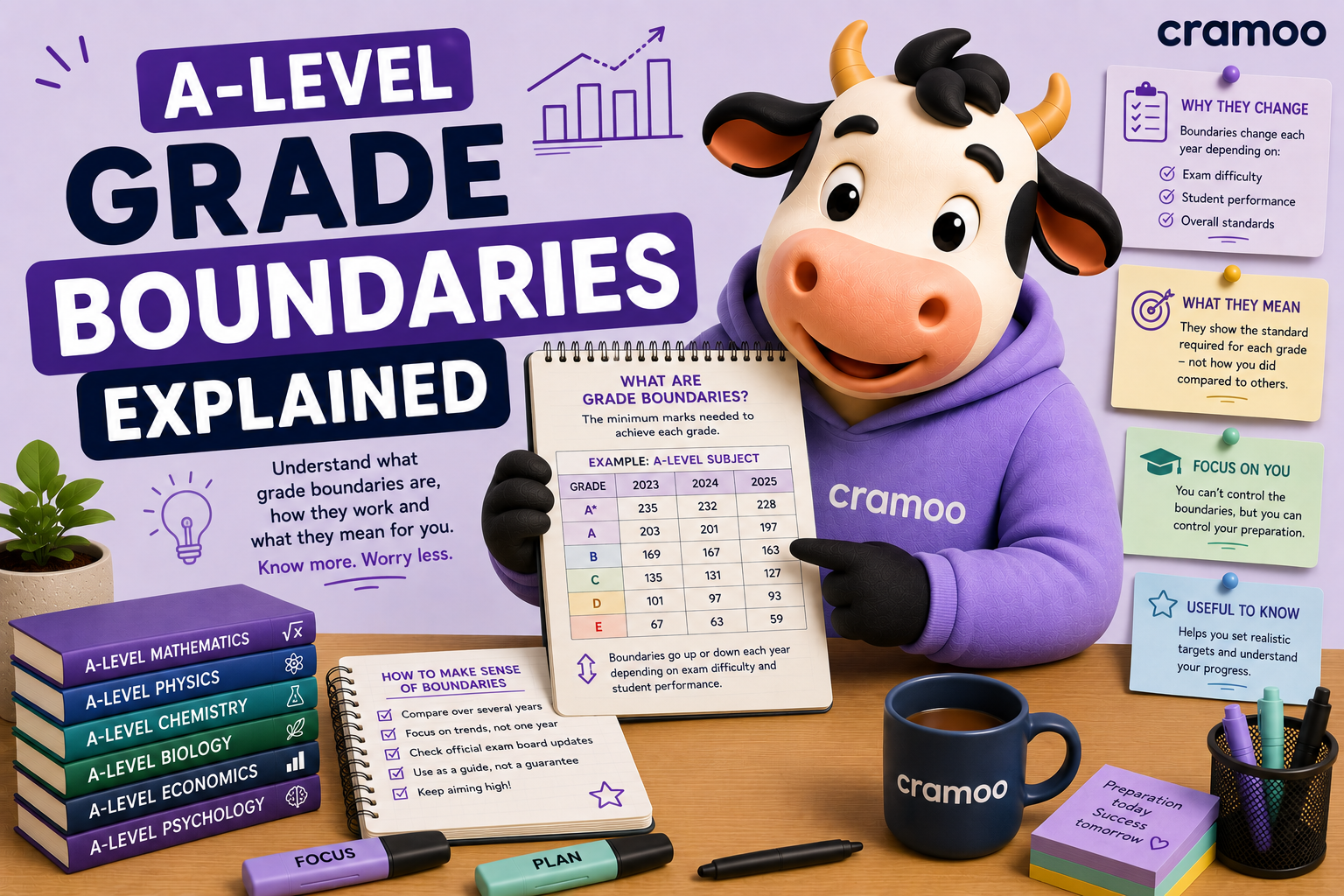
A-Level Grade Boundaries Explained
Why there is no fixed percentage for an A*, how boundaries are set each year, and how to use them when marking past papers.
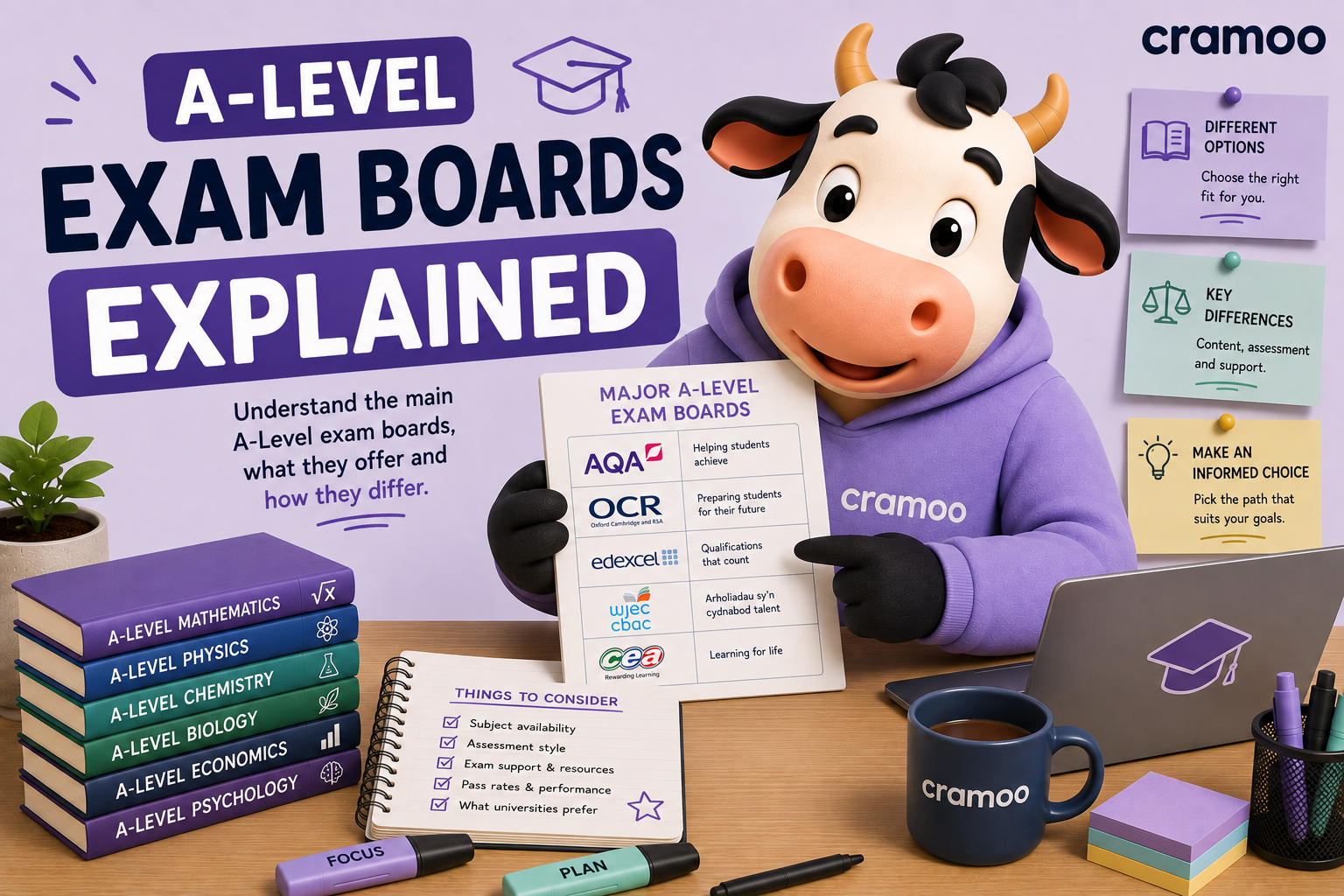
A-Level Exam Boards Explained
Which board you sit changes your specification, papers and mark schemes. Here is how to find out and why it matters.
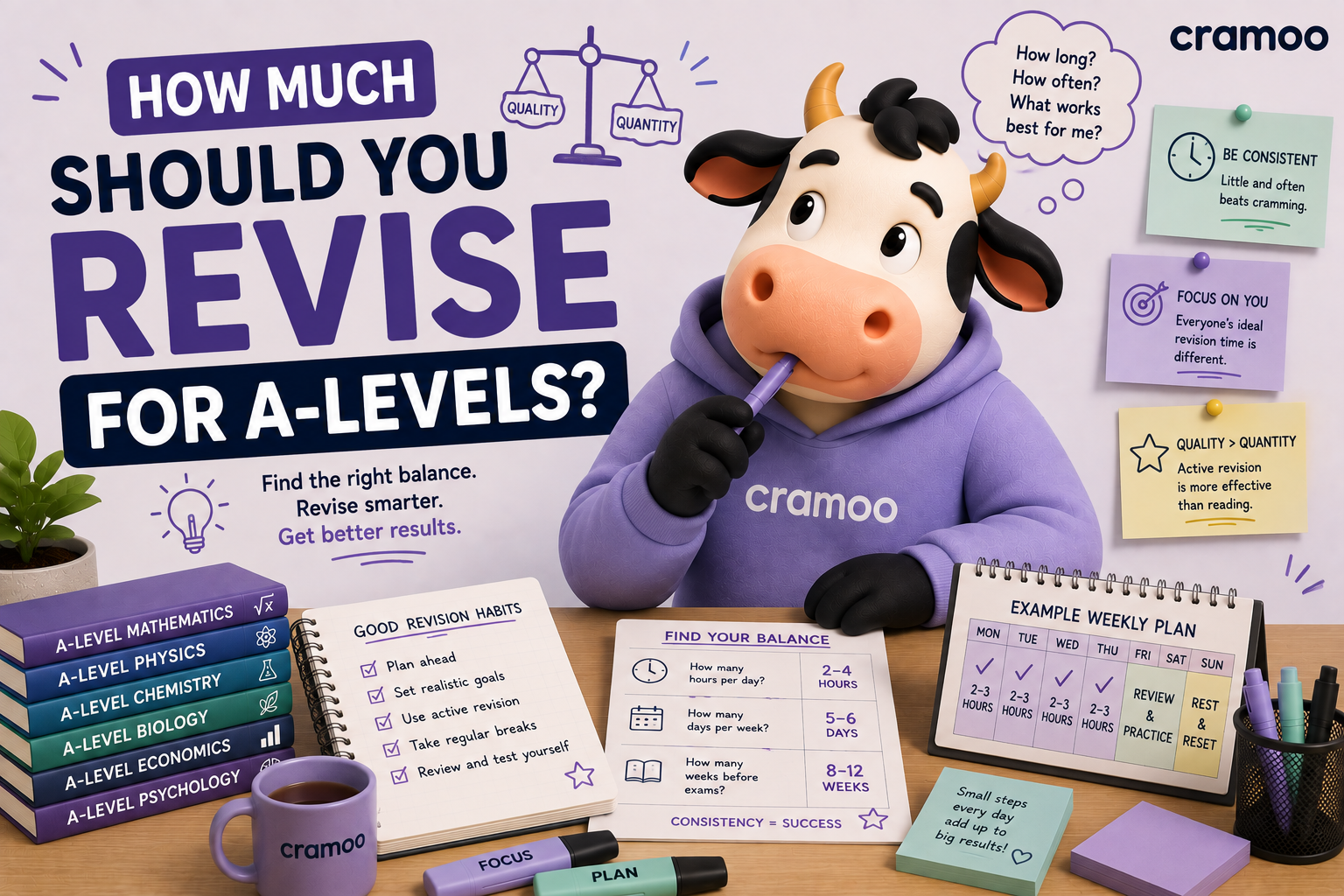
How Much Should You Revise for A-Levels?
How many hours of A-Level revision you actually need per day in term time, the holidays and study leave.