
How to Build an A-Level Revision Timetable
A step-by-step method for building a realistic A-Level revision timetable you will actually follow.
A timetable is not decoration. It is the thing that stops you revising your favourite subject for the fourth time while ignoring the topic that will actually cost you a grade. At A-Level, where you might be juggling three or four subjects plus coursework and university applications, a plan is the difference between feeling in control and feeling permanently behind.
This guide shows you how to build a timetable you will actually stick to, plus a week template you can copy.
Start With the Content, Not the Clock
Most students open a blank grid and start filling in hours. That is backwards. Begin with what has to be covered:
- Download each subject's specification.
- Break it into revision-sized topics — roughly what you could cover in one 45-minute block.
- Traffic-light every topic: green, amber, red.
- Count them. Now you know how many blocks you need, and the timetable is just arithmetic.
Our A-Level Revision Checklist covers this audit step in more detail.
Work Backwards From Your Exam Dates
Find your first written exam, then count the weeks. Split that time into three phases:
- Phase 1 — coverage (until roughly six weeks out). One pass through every topic, converting notes into flashcards and summary sheets as you go.
- Phase 2 — practice (final six weeks). Timed past-paper questions by topic, plus targeted work on reds.
- Phase 3 — polish (final ten days). Whole papers, flashcard review, and quick-recall sheets only. No new content.
Check the key dates in A-Level Exam Dates 2026 before you set the deadlines.
Use Blocks, Not Vague Hours
"Revise Chemistry, 2 hours" is not a plan — it is a wish. Write instead: "Chemistry: rate equations, 45 min, past-paper questions from June 2023." Specific tasks remove the decision-making that causes procrastination.
A 45-minute block with a 10-minute break is the sweet spot for most people. Two blocks after school on a weekday is plenty during term time.
A Sample Term-Time Week
For a Year 13 student taking three subjects:
- Monday: Block 1 — Maths (red topic). Block 2 — Biology flashcard review + one six-marker.
- Tuesday: Block 1 — Psychology evaluation practice. Block 2 — Maths past-paper questions.
- Wednesday: Block 1 — Biology required practical notes. Block 2 — Psychology essay plan (5 min plans x3).
- Thursday: Block 1 — Maths mixed topics. Block 2 — Biology red topic.
- Friday: Off, or 20 minutes of flashcards only.
- Saturday: One timed past paper (rotate subjects weekly) + marking it properly.
- Sunday: Two blocks on your weakest subject, plus a 20-minute review of everything from the week.
Every day starts with ten minutes of flashcard review over breakfast. That habit alone handles spaced repetition without eating into study blocks — Cramoo will build the decks from your notes so you are not writing cards by hand.
Holiday and Study-Leave Timetables
Holidays are where you make up ground, but a nine-hour day is a fantasy. Aim for four to five focused hours:
- Morning: two blocks on your hardest subject, while your brain is fresh.
- Early afternoon: one timed past-paper section.
- Late afternoon: one lighter block — flashcards, notes tidying, or example banks.
- Evening: off.
During study leave, mirror the exam timetable. If your paper is at 9am, revise that subject at 9am so your brain is used to performing at that hour.
Build In Repetition Deliberately
The most common timetable mistake at A-Level is scheduling each topic exactly once. You will forget most of it. Every topic needs at least three touches:
- First coverage — make the flashcards and summary sheet.
- Review a week later — recall test, no notes.
- Application — past-paper questions on that topic.
If your timetable does not show the same topic three times, it is a coverage plan, not a revision plan.
Keep It Flexible
Life happens. Build in two "catch-up" slots a week with nothing scheduled. If you have kept up, use them to do extra past papers or take the time off. If you have slipped, they absorb the slippage without the whole plan collapsing — which is the usual reason students abandon a timetable in week three.
Track Progress, Not Just Time
Hours logged is a vanity metric. At the end of each week, note:
- which topics moved from red to amber, or amber to green
- your past-paper marks and what caused the drops
- what you will change next week
That five-minute review is the most valuable slot in the entire timetable.
Tools You Can Use
Paper planners, a spreadsheet, or a wall calendar all work — the format matters far less than actually looking at it every day. Whatever you choose, keep it visible and keep it simple enough to update in two minutes.
For the underlying techniques, read How to Revise for A-Level Exams, and for realistic hour targets see How Much Should You Revise for A-Levels?
Your First Timetable in 30 Minutes
- List your subjects and their exam dates.
- Break each specification into topics and traffic-light them.
- Block out school, work, sport, and one free evening.
- Fill the remaining slots with named topics, weakest first.
- Add two catch-up slots and a Sunday review.
Then start it tomorrow, not next Monday. A rough timetable used today beats a perfect one that begins after the weekend.
More guides are in the A-Level hub, or turn your notes into a revision deck with Cramoo.
Frequently asked questions
Related reading
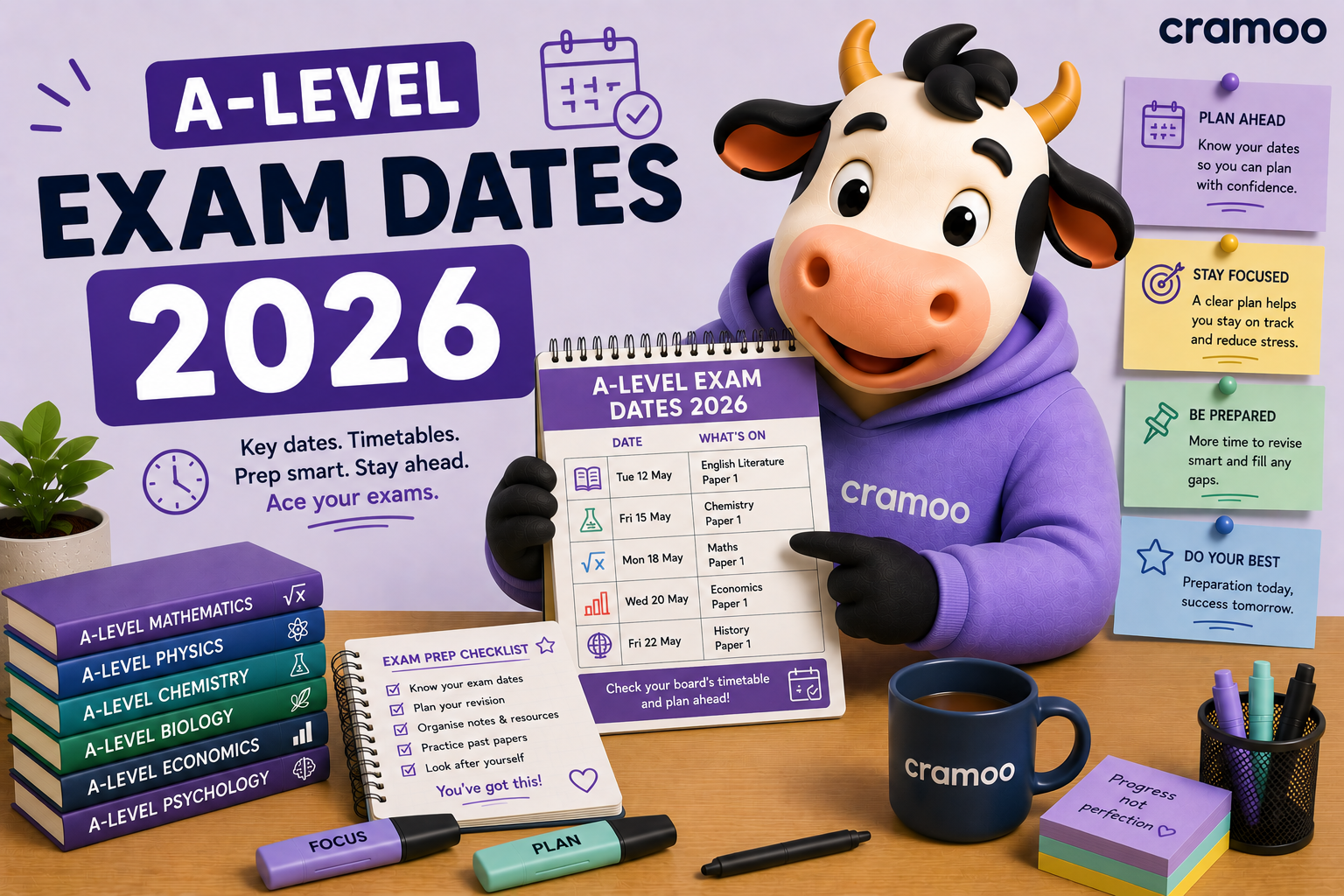
A-Level Exam Dates 2026
A-Level exams in 2026 are expected to run from mid-May to late June, with Results Day on Thursday 13 August 2026.
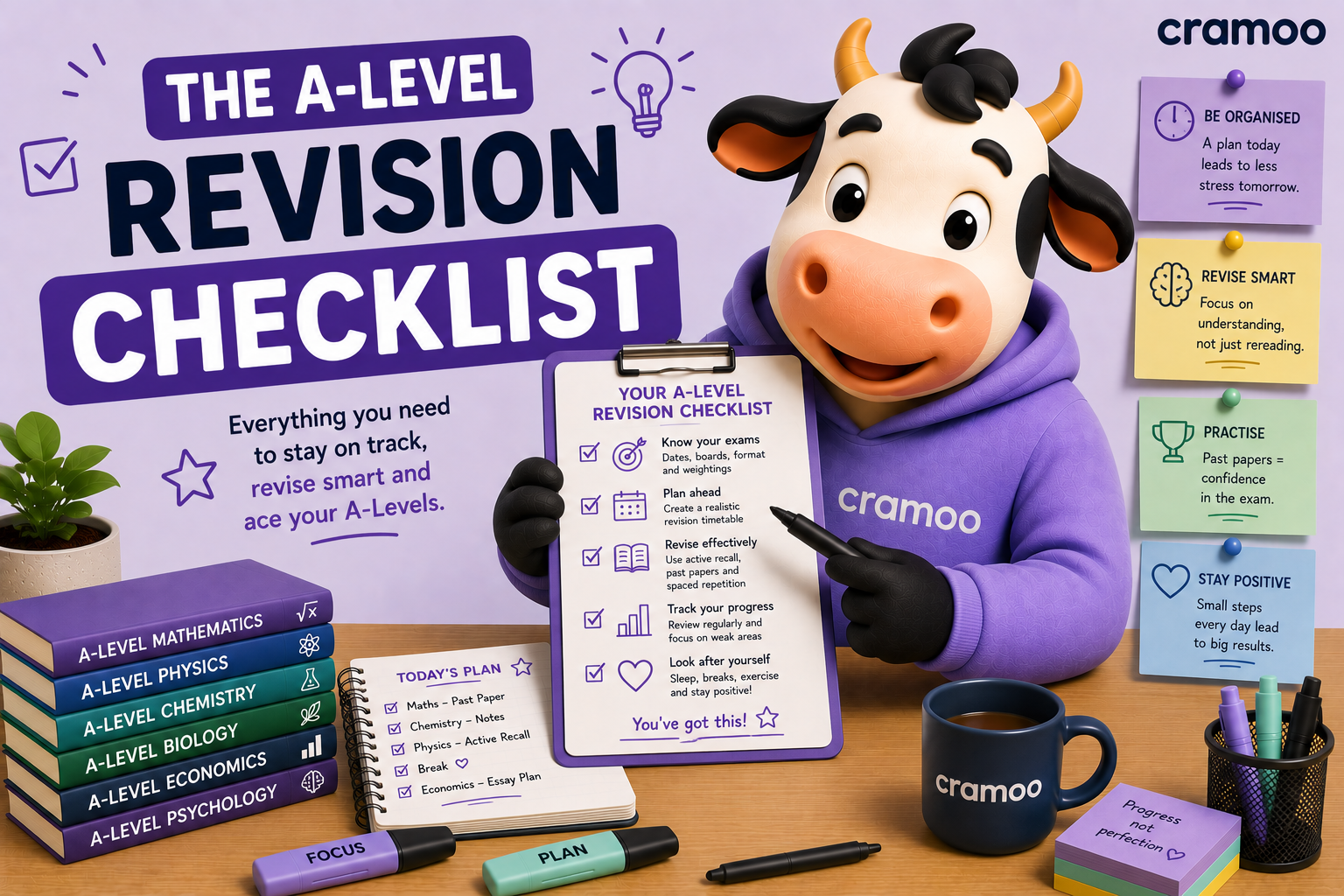
The A-Level Revision Checklist
Turn a 60-page specification into a list of finishable jobs with this A-Level revision checklist.
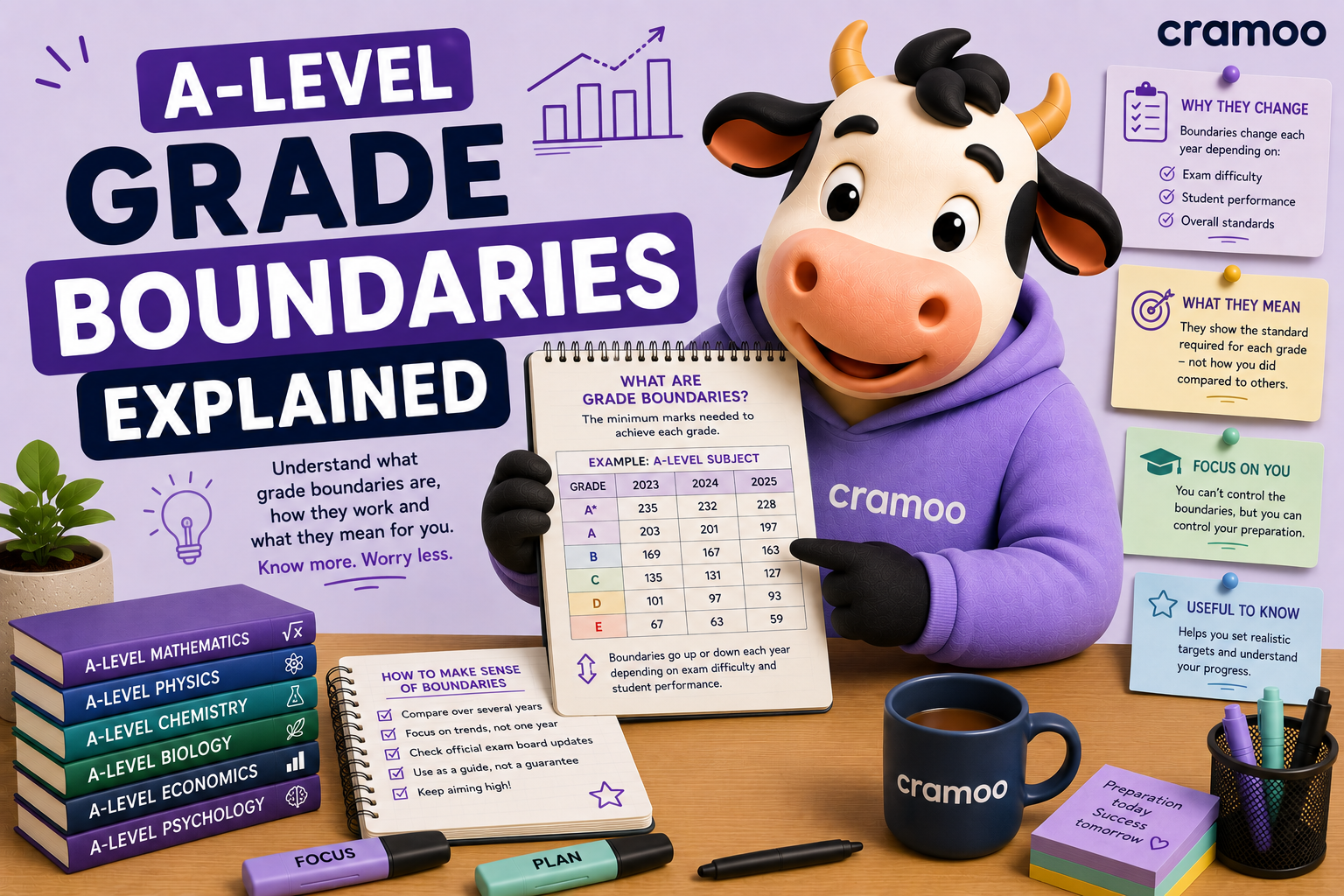
A-Level Grade Boundaries Explained
Why there is no fixed percentage for an A*, how boundaries are set each year, and how to use them when marking past papers.
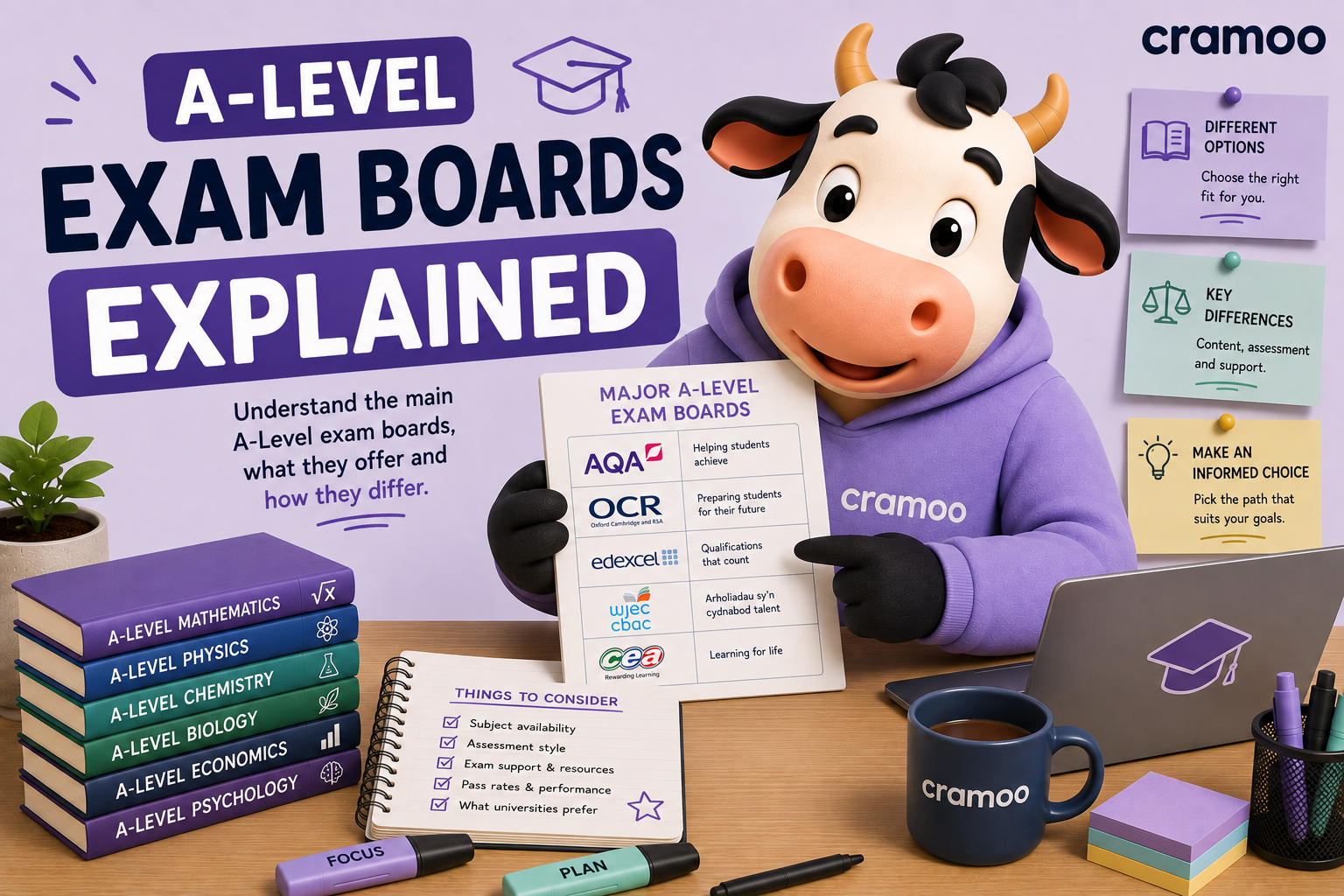
A-Level Exam Boards Explained
Which board you sit changes your specification, papers and mark schemes. Here is how to find out and why it matters.