
A-Level Grade Boundaries Explained
Why there is no fixed percentage for an A*, how boundaries are set each year, and how to use them when marking past papers.
There is no fixed percentage for an A* at A-Level. The number of marks needed for each grade is set after every paper has been marked, and it changes each summer depending on how difficult that particular paper turned out to be. Understanding why is genuinely useful: it changes how you interpret past-paper scores and how you set targets.
What a Grade Boundary Is
A grade boundary is the minimum raw mark required to achieve a particular grade in a paper or in the overall qualification. For example, an A-Level Chemistry paper might need 68 out of 105 for an A in one year and 63 the next.
A-Levels are graded A*, A, B, C, D and E, with U meaning unclassified. Boundaries are published for each individual component and for the qualification as a whole.
Why They Change Every Year
Exam boards cannot make two papers identically difficult. Instead of pretending they can, they adjust the boundaries so that a grade means the same thing from one year to the next. This is called comparable outcomes.
Senior examiners at awarding meetings combine two sources of evidence:
- Statistical evidence — how this cohort performed at GCSE, so the board knows roughly what proportion of them would be expected to achieve each grade.
- Examiner judgement — senior examiners read real scripts at the proposed boundaries to check the work genuinely represents that standard.
If a paper was harder than intended, boundaries fall. If it was easier, they rise. Either way, students are not penalised for sitting an unusually tough paper. For the wider process, see How A-Levels Are Marked.
Uniform Mark Scale and the A*
Because papers differ in difficulty, boards convert your raw mark into a Uniform Mark Scale (UMS) or scaled mark before adding components together. That is why your reported component marks may not match the raw marks you counted up.
The A* is awarded on overall performance across the qualification — typically requiring an A overall plus a very high aggregate in the A2 components, depending on the board's rules for that subject. Check your board's published rule rather than relying on rumours.
Typical Ranges
As a rough guide across popular A-Level subjects, boundaries often sit somewhere near:
- A* — roughly 80% of the total marks
- A — roughly 70%
- B — roughly 60%
- C — roughly 50%
- D — roughly 40%
- E — roughly 30%
Treat these as orientation only. Maths and the sciences frequently sit lower than these figures; essay subjects sometimes sit higher. Always look up the actual published boundaries for your board, subject and year.
How to Use Past Boundaries in Revision
This is where boundaries become a practical revision tool rather than trivia.
- Complete a past paper under timed conditions.
- Mark it against the official mark scheme.
- Look up the published grade boundaries for that specific paper and year.
- Convert your raw mark into the grade it would have produced.
That gives you a far more meaningful benchmark than a raw percentage. Scoring 62% on a paper where an A was 60 is a very different message from 62% on a paper where an A was 78.
Track this over several papers and you will see a trend line rather than a single noisy data point. Our A-Level Revision Checklist has a column for exactly this.
Where to Find Published Boundaries
Every board publishes grade boundary documents on results day, and archives previous series:
- AQA publishes PDF boundary tables by subject and series.
- Pearson Edexcel publishes raw and UMS boundaries per unit.
- OCR publishes boundaries alongside its results materials.
- WJEC/Eduqas and CIE publish equivalent documents.
Search for your subject code and the series (for example "June 2025"). If you are unsure which board you sit, read A-Level Exam Boards Explained.
Common Misconceptions
- "You need 90% for an A."* Usually not — high 70s and low 80s is far more typical.
- "Boundaries are set before the exam." They are set after marking, once the board can see how the cohort performed.
- "Boundaries are lowered if everyone complains." Complaints do not move boundaries. Evidence from marked scripts and cohort data does.
- "The same boundary applies to every paper." Each component has its own boundary, and they can differ a lot within the same subject.
What This Means For Your Target
Aim comfortably above the boundary you need. If an A has averaged 70% over the last five years, a student consistently scoring 71% is one hard paper away from a B. Building a margin — say five to eight marks — is the practical way to make a target grade secure.
That margin comes from the same place it always does: retrieval practice on your weakest topics, and timed past-paper work. Turn your notes into flashcards with Cramoo and review the reds daily.
Next Steps
- Find the published boundaries for the last three years of your subject.
- Note the average mark needed for your target grade.
- Add five marks. That is your working target on every past paper from now on.
More guides in the A-Level hub, including A-Level Exam Dates 2026.
Frequently asked questions
Related reading

A-Level Exam Dates 2026
A-Level exams in 2026 are expected to run from mid-May to late June, with Results Day on Thursday 13 August 2026.

The A-Level Revision Checklist
Turn a 60-page specification into a list of finishable jobs with this A-Level revision checklist.
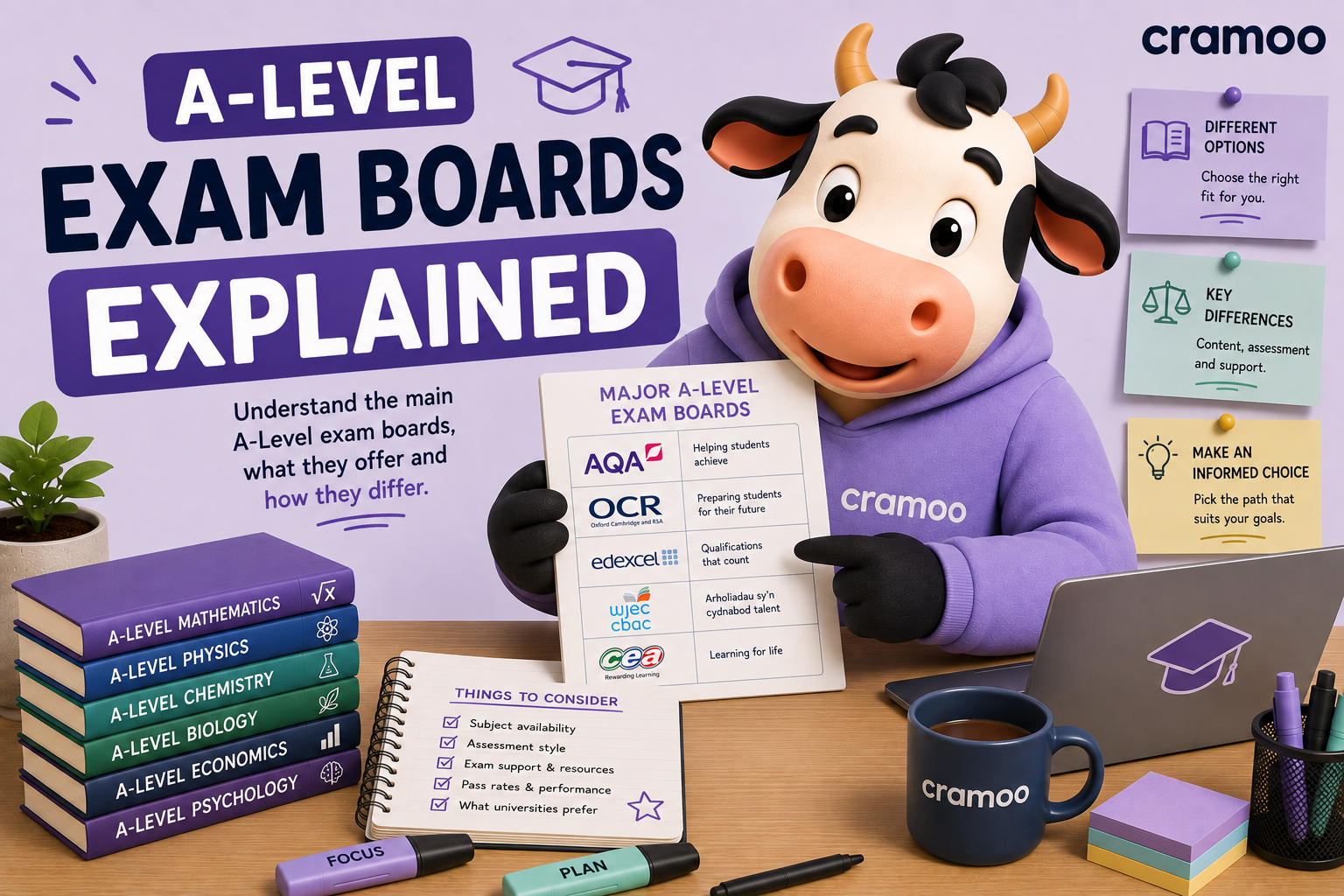
A-Level Exam Boards Explained
Which board you sit changes your specification, papers and mark schemes. Here is how to find out and why it matters.
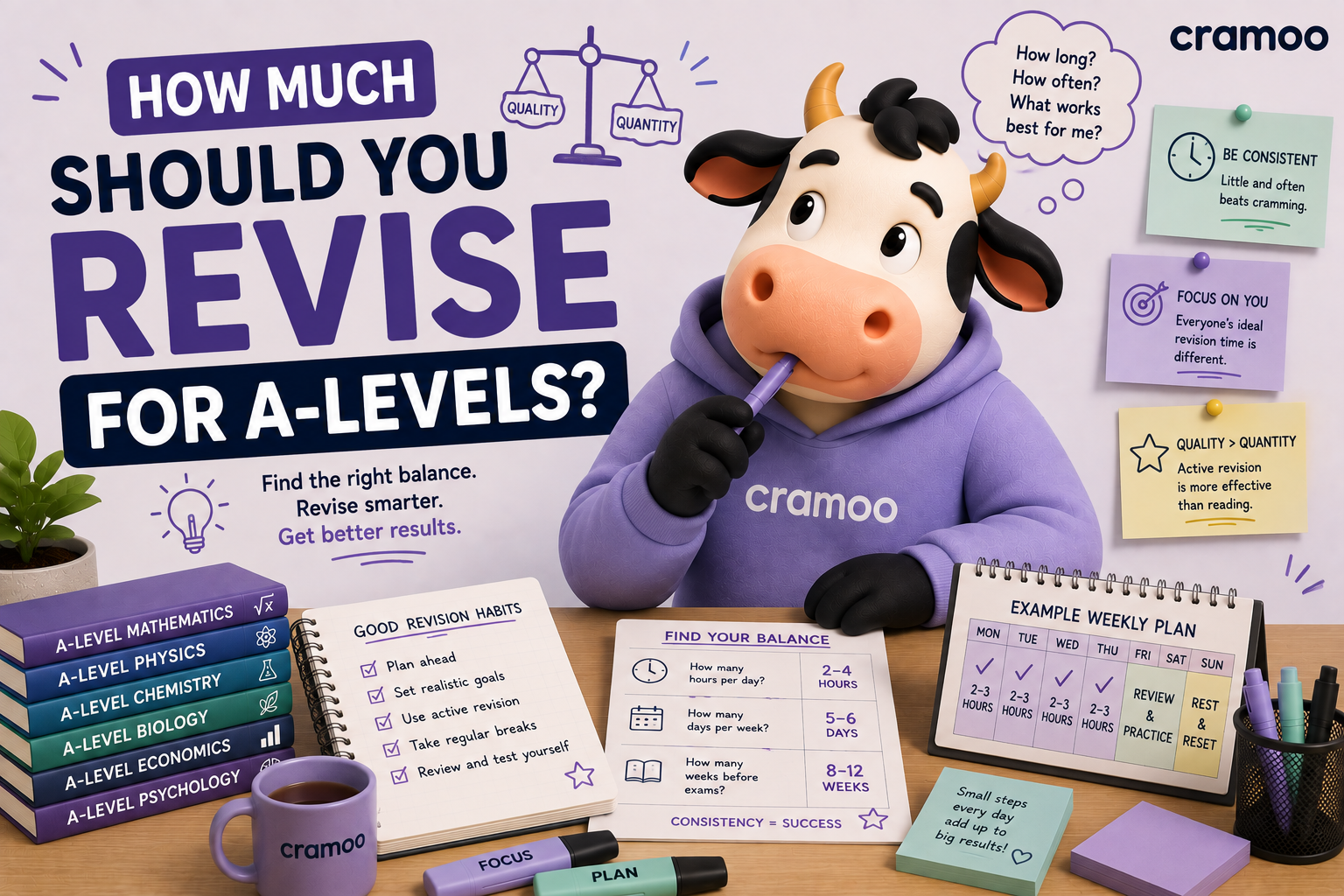
How Much Should You Revise for A-Levels?
How many hours of A-Level revision you actually need per day in term time, the holidays and study leave.