
All articles
Every free revision guide, tip and walkthrough we've published — newest first.
How to Revise for A-Level Exams
The revision techniques that actually work at A-Level, and the comfortable ones that quietly waste your time.
How to create Revision Cards
Discover the most effective ways to create revision cards using active recall and spaced repetition to transform your exam preparation and boost your grades.
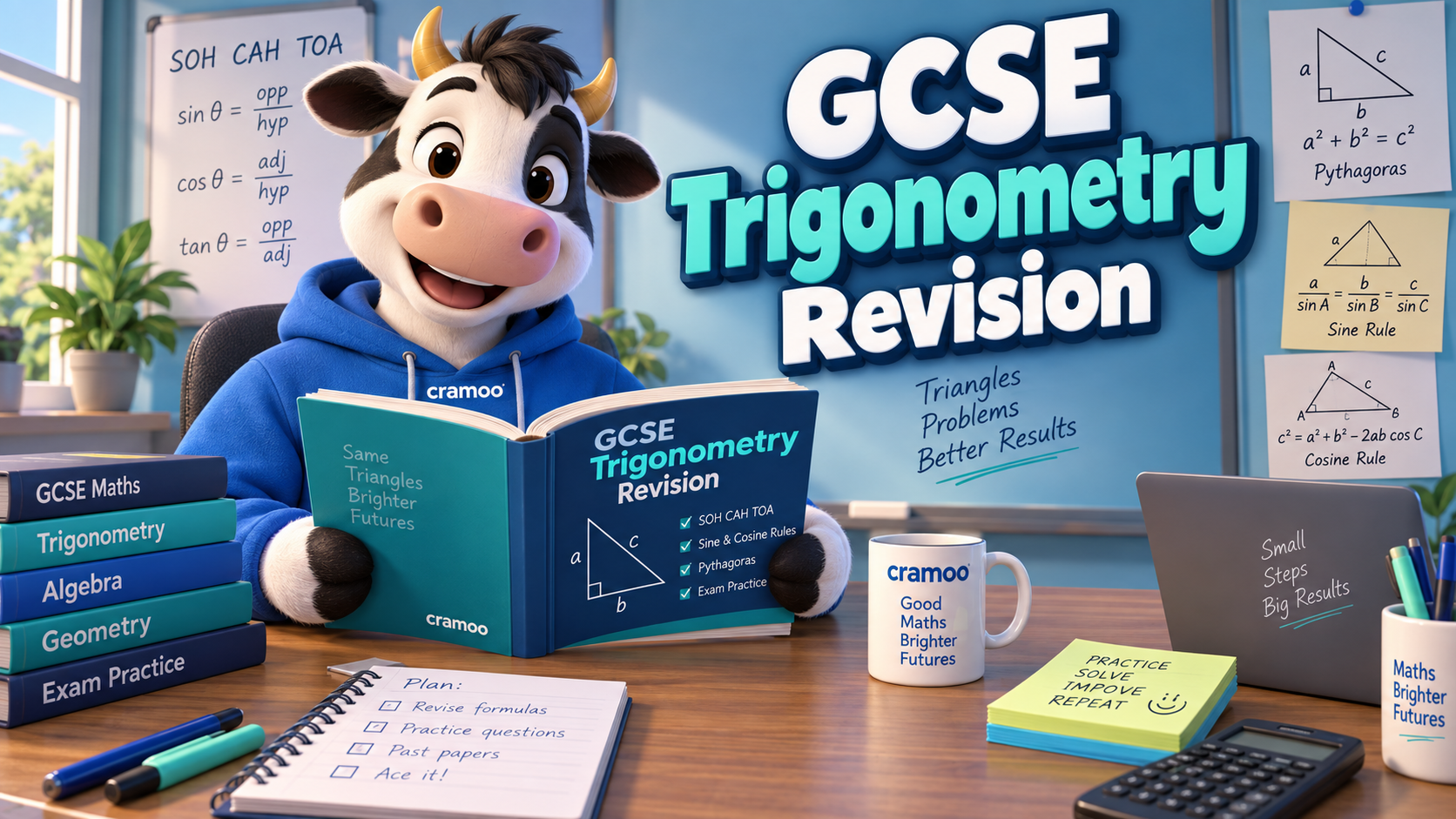
GCSE Trigonometry Revision
Master GCSE Trigonometry with our guide to SOH CAH TOA, the sine and cosine rules, and Pythagoras. Learn how to solve triangle problems and ace your maths exams.
GCSE Probability Revision
Master GCSE Probability with our guide covering scale basics, tree diagrams, Venn diagrams, and independent events to help you ace your Maths exams.
GCSE Geometry Revision
Master every angle, circle theorem, and volume formula with our comprehensive GCSE Geometry revision guide designed for UK students aiming for top grades.
GCSE Algebra Revision
Learn how to master GCSE Algebra revision with this guide covering simplifying expressions, solving equations, quadratics, and sequences to boost your maths grade.
GCSE Revision Timetable
A GCSE revision timetable is more than just a calendar. It is a strategic plan that ensures you cover every topic before exam day while staying balanced and stress-free.
How to Revise for GCSE Exams
Learn how to revise for GCSE exams using evidence-based techniques like active recall and spaced repetition to improve memory retention and boost your grades.
The Complete GCSE Revision Guide
Revision is not just about reading textbooks. This guide covers how to use active recall, past papers, and effective planning to ace your GCSE exams.
Complete GCSE Maths Revision Guide
Master your exams with this complete GCSE Maths revision guide. We break down the syllabus, provide proven study methods, and show you how to tackle past papers.
How Much Should You Revise for GCSEs?
Most teachers suggest 2 to 3 hours of revision per day during the exam season, but the right amount depends on your goals and how early you start your preparation.
How GCSEs Are Marked
GCSE exams are marked by trained examiners using strict mark schemes and a process called awarding to ensure every student receives a fair and accurate grade.
GCSE Exam Boards Explained: AQA vs Edexcel vs OCR
Not sure which GCSE exam board you are on? This guide compares AQA, Edexcel and OCR side by side, shows how to check your board for each subject, and where to find the right past papers.
GCSE Grade Boundaries Explained
Understand how GCSE grade boundaries work, why they change every year, and how to use past boundaries to track your progress and aim for a Grade 9.
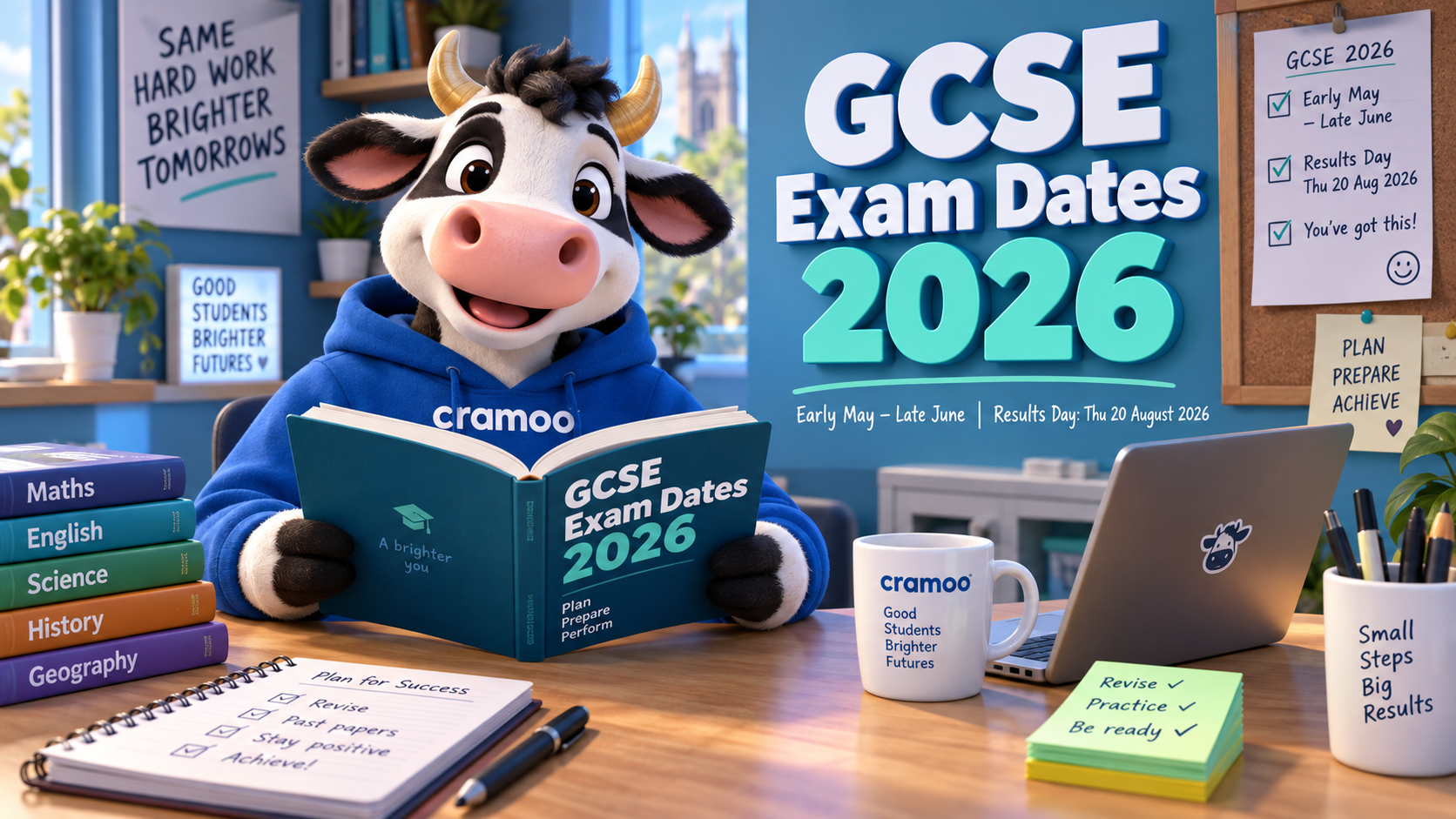
GCSE Exam Dates 2026
GCSE exams in 2026 are expected to start in early May and run until late June, with Results Day falling on Thursday 20 August 2026.
GCSE Revision Checklist
A master GCSE revision checklist is essential for staying organised. Learn how to break down your subjects, track your progress, and use active recall effectively.