
Complete GCSE Maths Revision Guide
Master your exams with this complete GCSE Maths revision guide. We break down the syllabus, provide proven study methods, and show you how to tackle past papers.
GCSE Maths is a core requirement for almost every post-16 path, whether you are heading to university or an apprenticeship. While the volume of content can feel overwhelming, success comes down to understanding the logic behind the numbers rather than just memorising formulas. This guide walks you through every step of the revision process to help you move from a pass to a Grade 9.
Understanding Your Exam Board and Tier
Before you open a textbook, you need to know exactly what you are being tested on. In the UK, the main exam boards are AQA, Edexcel, and OCR. While the national curriculum is the same, the style of questions and the layout of the papers vary slightly.
Crucially, you must know if you are sitting the Foundation or Higher tier. Foundation tier allows you to achieve up to a Grade 5, while the Higher tier covers Grades 4 to 9. If you are regularly scoring high marks in class, you will likely sit the Higher paper, which includes more complex algebra and trigonometry. Check with your teacher so your GCSE revision is targeted at the right level.
Core Topic Categories
The GCSE Maths syllabus is divided into six main areas. You should check these against your exam board specification to ensure you have no gaps in your knowledge.
- Number: This includes fractions, decimals, percentages, ratios, and powers. It is the foundation for everything else.
- Algebra: You will need to master simplifying expressions, solving equations, rearranging formulas, and working with quadratic graphs.
- Ratio, Proportion, and Rates of Change: This covers compound interest, direct and inverse proportion, and speed-distance-time calculations.
- Geometry and Measures: Expect questions on area, volume, Pythagoras' Theorem, trigonometry, and circle theorems.
- Probability: You must understand tree diagrams, Venn diagrams, and the difference between experimental and theoretical probability.
- Statistics: This involves interpreting data using histograms, cumulative frequency graphs, and box plots.
Active Revision Techniques that Work
Reading through your notes is the least effective way to revise Maths. Because it is a practical subject, you need to do the work.
Use Flashcards for Formulas
While some formulas are provided in a sheet, many are not. You should use flashcards to memorise the ones you need, such as the area of a trapezium or the sine rule. You can create a free deck to test yourself on these during your commute or in short breaks. If you have handwritten notes on specific methods, you can upload your notes to turn them into digital study aids quickly.
The 'Red-Amber-Green' Method
Print out your subject specification and go through every topic. Mark them in red if you have no idea how to do them, amber if you are shaky, and green if you can do them in your sleep. Start your revision with the red topics. It is tempting to practice what you are already good at, but you will find the biggest grade increases by tackling your weaknesses head-on.
Spaced Repetition
Do not spend five hours on algebra on Monday and then ignore it for a month. Your brain needs to revisit information periodically to move it into long-term memory. Plan to review a topic one day later, then three days later, then a week later. This is often more effective than traditional study guides that encourage linear reading.
How to Tackle Past Papers
Past papers are the single most important resource in your revision toolkit. However, how you use them matters.
Open Book Practice
When you first start, do not worry about the timer. Use your notes and textbooks to help you find the right method. This builds confidence and ensures you are learning the correct way to solve a problem before you try it under pressure.
Timed Conditions
As you get closer to your exams, you must sit at least three full papers under timed conditions. This helps you manage the 'mark-a-minute' rule. In GCSE Maths, you generally have about one and a half minutes per mark. If a four-mark question is taking you ten minutes, move on and come back to it later.
Using Mark Schemes
Do not just check the final answer. Look at the 'method marks'. If you get a question wrong, the mark scheme will show you exactly where you diverted from the correct path. Often, you can get two out of three marks even if your final answer is wrong, provided your substitution and working are clear.
Common Pitfalls to Avoid
Many students lose marks for simple errors rather than a lack of mathematical knowledge.
- Calculator Settings: Ensure your calculator is in 'Degree' (D) mode, not 'Radians' (R), for trigonometry questions.
- Units: Always check if the question asks for the answer in centimetres, metres, or a specific unit of time.
- Rounding Too Early: Keep the full decimal on your calculator screen until the very final step. Rounding during intermediate steps can lead to an incorrect final value.
- Showing Working: Even if you can do it in your head, write it down. Examiners cannot give you credit for your logic if it isn't on the paper.
Preparing for Paper 1 (Non-Calculator)
Paper 1 is always the non-calculator paper. This requires strong mental arithmetic. Practice your long multiplication, division, and working with decimals without reaching for a device. Common questions involve estimating the square root of a number or calculating percentage changes. If you find these difficult, find more specific advice in our wider revision tips.
Using Online Resources
While textbooks are great for practice questions, YouTube and revision apps are better for seeing a method in action. Sometimes hearing a different teacher explain a concept like 'completing the square' makes it click. Look for subject hubs that offer specific resources for your exam board to ensure the examples match what you will see on the day.
Frequently asked questions
Related reading
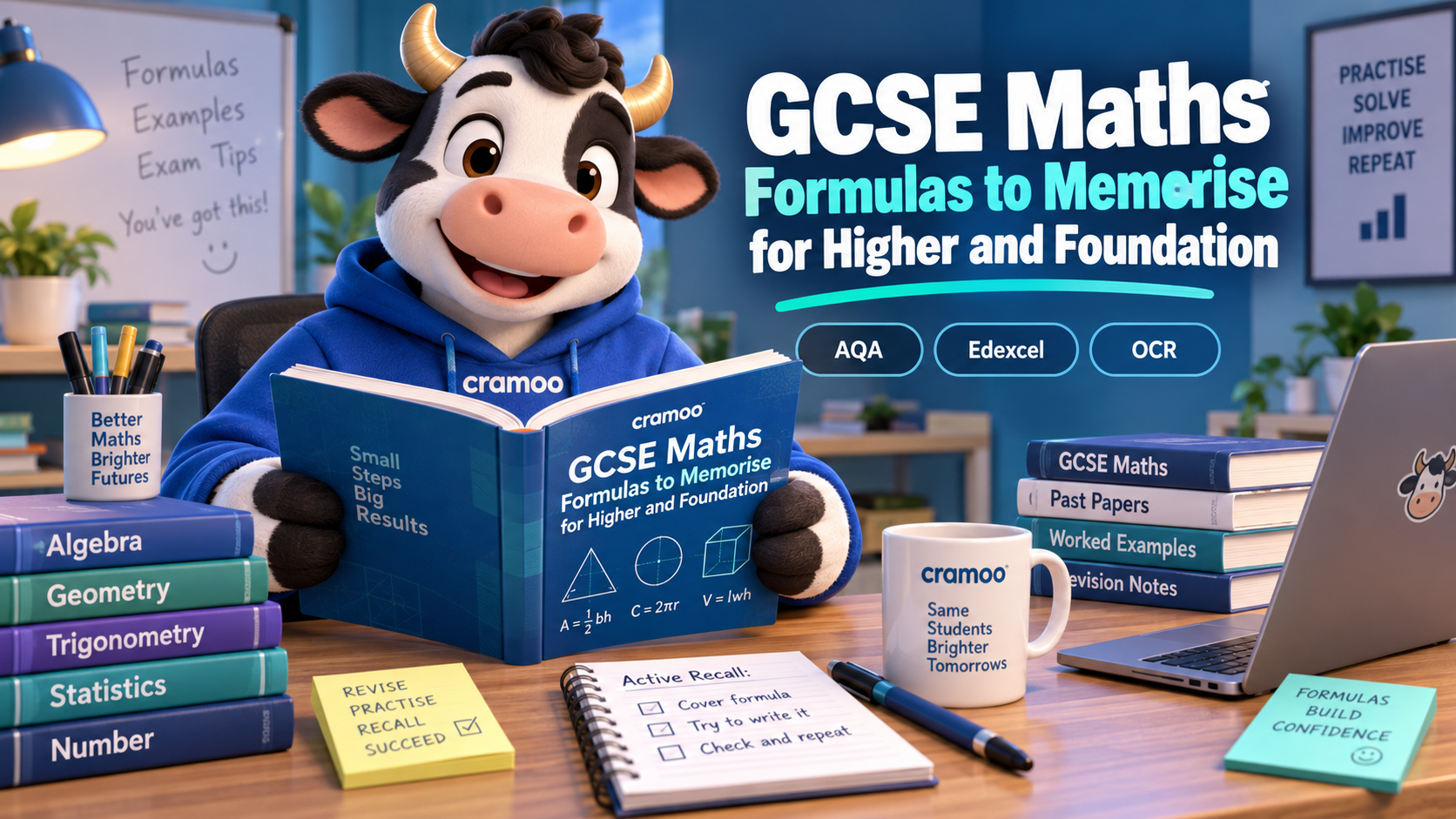
GCSE Maths Formulas to Memorise for Higher and Foundation
A comprehensive breakdown of all GCSE maths formulas you must memorise for AQA, Edexcel, and OCR exams, featuring worked examples and active recall tips.
How to Stop Making Silly Mistakes in GCSE Maths
Tired of losing marks to silly errors in your GCSE Maths papers? Discover the specific techniques used by top students to catch mistakes before the timer runs out.
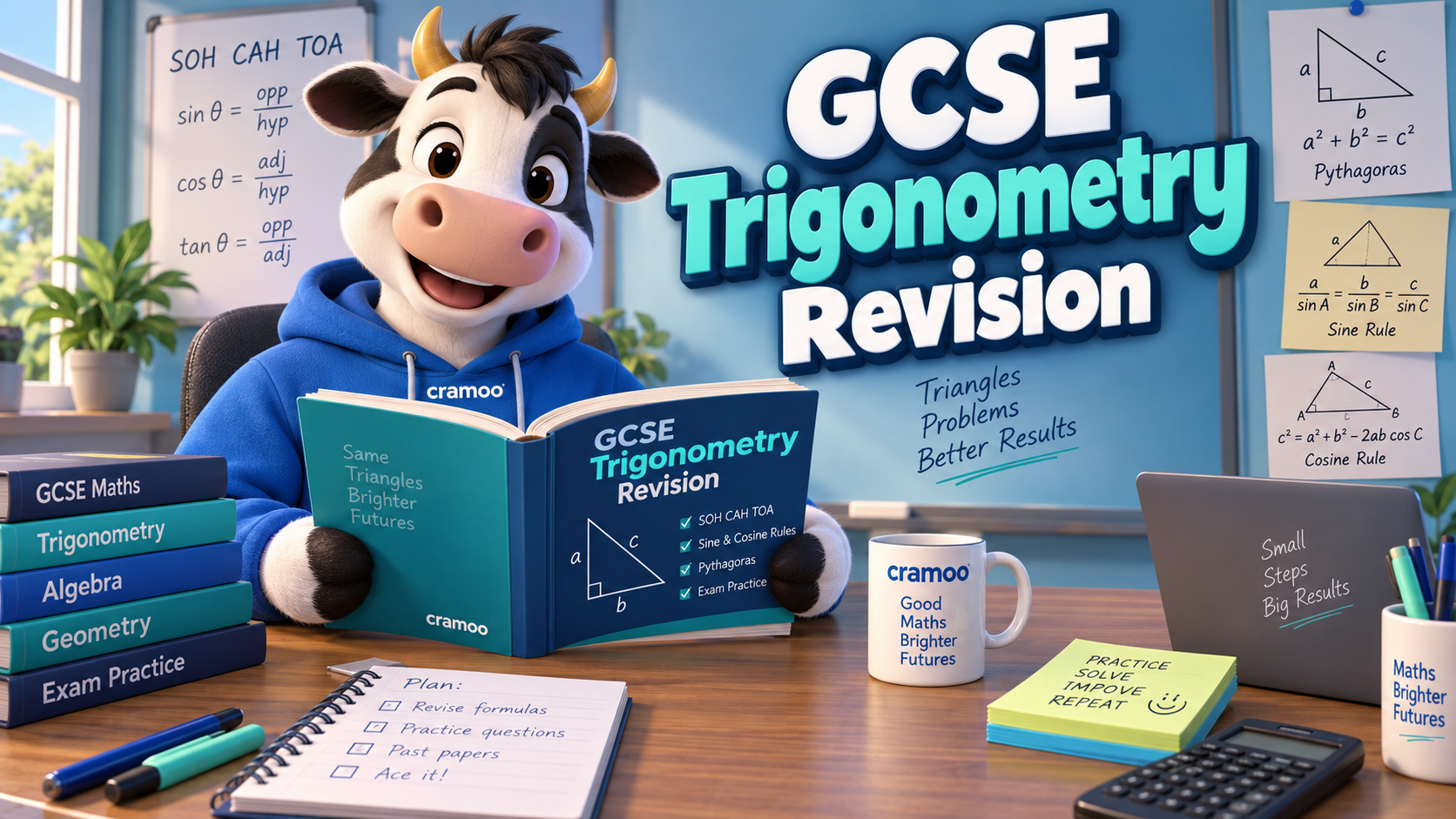
GCSE Trigonometry Revision
Master GCSE Trigonometry with our guide to SOH CAH TOA, the sine and cosine rules, and Pythagoras. Learn how to solve triangle problems and ace your maths exams.
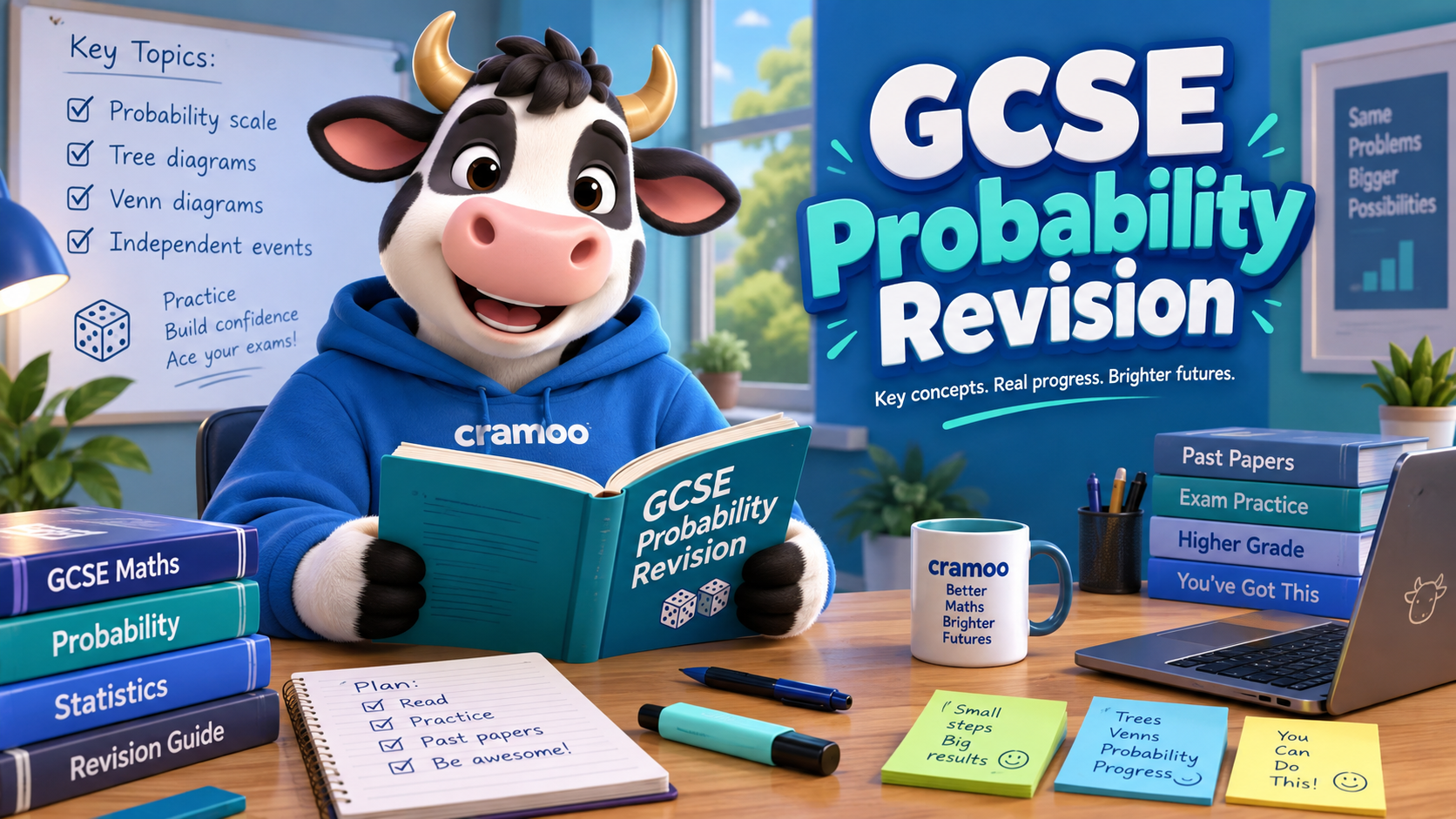
GCSE Probability Revision
Master GCSE Probability with our guide covering scale basics, tree diagrams, Venn diagrams, and independent events to help you ace your Maths exams.