
GCSE Grade Boundaries Explained
Understand how GCSE grade boundaries work, why they change every year, and how to use past boundaries to track your progress and aim for a Grade 9.
GCSE Grade Boundaries Explained
Every year, as results day approaches, the term 'grade boundaries' starts trending on social media. For many students, these numbers feel like a moving target that determines the difference between a Grade 4 and a Grade 5, or a Grade 8 and the elusive Grade 9. Understanding how these boundaries work can take the mystery out of your results and help you focus your efforts during your Revision.
What are GCSE grade boundaries?
A grade boundary is the minimum mark you need to achieve a specific grade in an exam. For example, if the boundary for a Grade 7 in GCSE Maths is 145 marks out of 240, any student scoring 145 or above (but below the Grade 8 boundary) will receive a Grade 7.
Boundaries are set for each individual paper, but what most students care about are the 'subject-level' boundaries. These are the total marks across all papers in a specific subject. Because different exam boards like AQA, Edexcel, and OCR write their own papers, each board has a unique set of boundaries for its subjects.
Why do grade boundaries change every year?
It is a common misconception that grade boundaries are set before you sit the exam. In reality, they are decided after all the papers have been marked. The primary reason boundaries shift is to account for the difficulty of the exam.
If a particular Biology paper was significantly harder than the previous year, the examiners will lower the boundary. This ensures that a student is not unfairly penalised simply because the questions were more challenging. Conversely, if a paper is quite straightforward, the marks required for a specific grade will likely rise. This system maintains the value of the grades over time, ensuring a Grade 6 in 2024 represents a similar level of ability as a Grade 6 in 2025.
The GCSE 9-1 grading system
The UK transitioned from the old A*-G system to the numerical 9-1 system several years ago. To help you understand how the new marks compare to the old ones, keep these benchmarks in mind:
- Grade 9: Higher than the old A*.
- Grade 7: Roughly equivalent to an old Grade A.
- Grade 4: A 'standard pass', equivalent to the bottom of an old Grade C.
- Grade 5: A 'strong pass', equivalent to the top of an old Grade C or a low Grade B.
Exam boards use a process called 'comparable outcomes' to ensure that, broadly speaking, the same proportion of students get a Grade 4 and above each year, regardless of the difficulty of the specific test paper.
How to use grade boundaries for GCSE revision
While you should not obsess over the exact numbers, grade boundaries are incredibly useful when you are working through past papers. If you are using our subject hubs to find practice materials, always look for the corresponding mark scheme and boundary table.
Track your progress
When you finish a past paper under timed conditions, mark it strictly using the official mark scheme. Then, check the boundaries for that specific year. This gives you a realistic idea of where you are currently performing. For more help with your study plan, check out The Complete GCSE Revision Guide.
Aim for a buffer
Boundaries can fluctuate by 5 to 10 marks between years. If you consistently score exactly on the boundary for a Grade 6, you are at risk if the boundary rises in your exam year. Always aim for a 'buffer' of at least 10% more marks than the boundary requires. This provides a safety net for those tricky questions that might pop up on the day.
Analyse the 'easy' marks
Looking at boundaries helps you realise that you don't need 100% to get a Grade 9. In many subjects, a Grade 9 might only require 75-85% of the total marks. This means you can afford to lose a few marks on the hardest questions if you are confident in picking up every single mark on the foundation topics. Use a GCSE Revision Checklist to ensure you haven't missed any of those easy-win topics.
Foundation vs Higher tier boundaries
In subjects like Maths, Combined Science, and Modern Foreign Languages, you will be entered for either the Foundation or Higher tier. Each has its own set of boundaries.
- Foundation Tier: The maximum grade you can achieve is a 5. The boundaries are often wider, meaning there is less room for error if you want that Grade 5.
- Higher Tier: You can achieve grades 4 to 9. However, the papers are much harder. If you fail to reach the minimum marks for a Grade 4, you might receive a 'U' (Unclassified), though there is a small 'safety net' Grade 3 available.
Deciding which tier to sit is a conversation to have with your teachers based on your mock exam results and your confidence with the more advanced syllabus content.
When are grade boundaries released?
In the past, exam boards released boundaries 24 hours before results day. To reduce student anxiety, they are now typically released on the morning of results day itself. You will be able to find them on the official websites of AQA, Pearson Edexcel, OCR, and Eduqas.
While waiting for your results, it is better to focus on your GCSE revision and preparation rather than speculating on what the boundaries might be. No one knows the exact numbers until the papers have been marked and the statistical analysis is complete.
Improving your marks
If you find that your practice paper scores are sitting just below the boundary you want, it is time to change your approach. Instead of just reading notes, try active recall. You can upload your notes to create interactive study aids that help you memorise key facts and formulas more effectively.
Focus on the areas where you lose the most marks. Is it the long-answer 6-mark questions in Science? Or perhaps it's the timing in English Literature? By identifying these gaps and using targeted revision tips, you can push yourself over the next grade boundary and achieve the results you need for your next steps at college or sixth form.
Frequently asked questions
Related reading
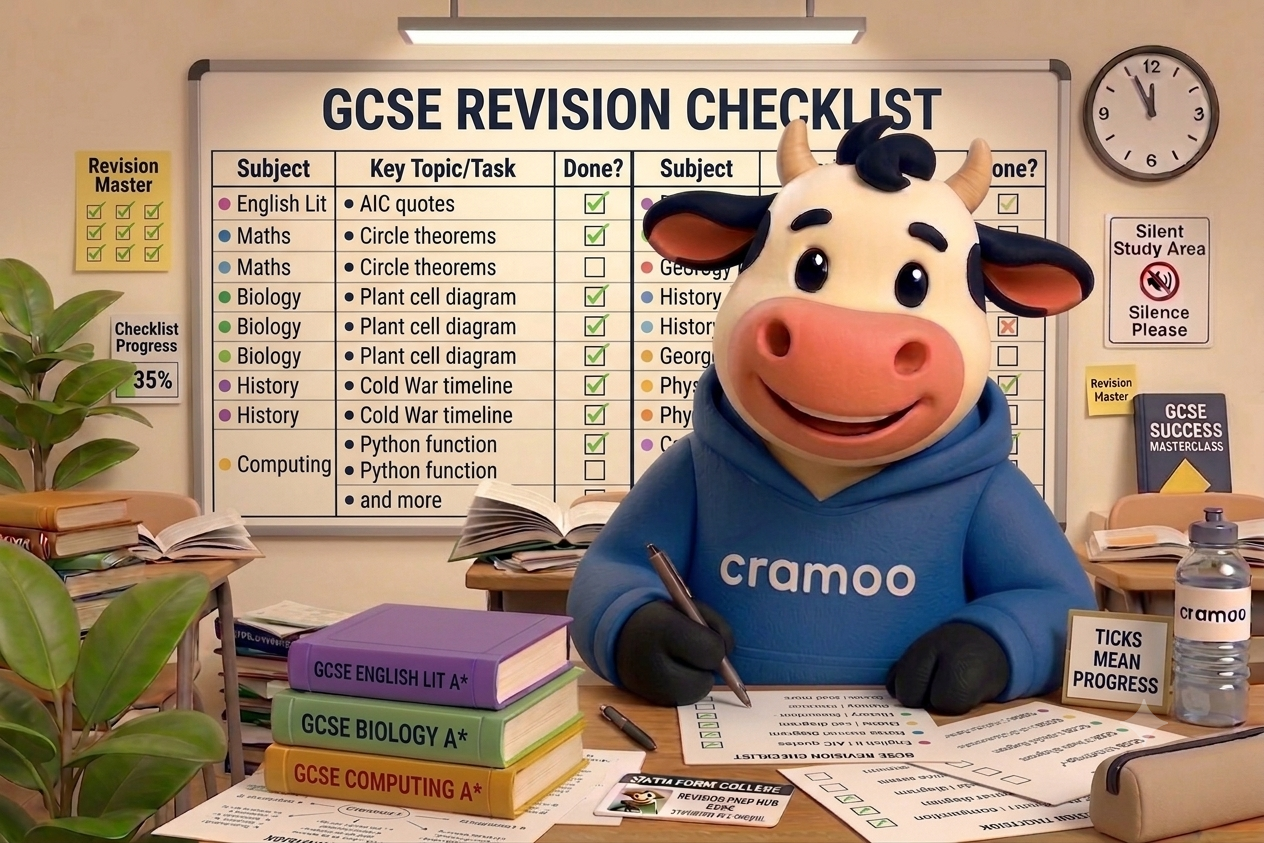
GCSE Revision Checklist
A master GCSE revision checklist is essential for staying organised. Learn how to break down your subjects, track your progress, and use active recall effectively.
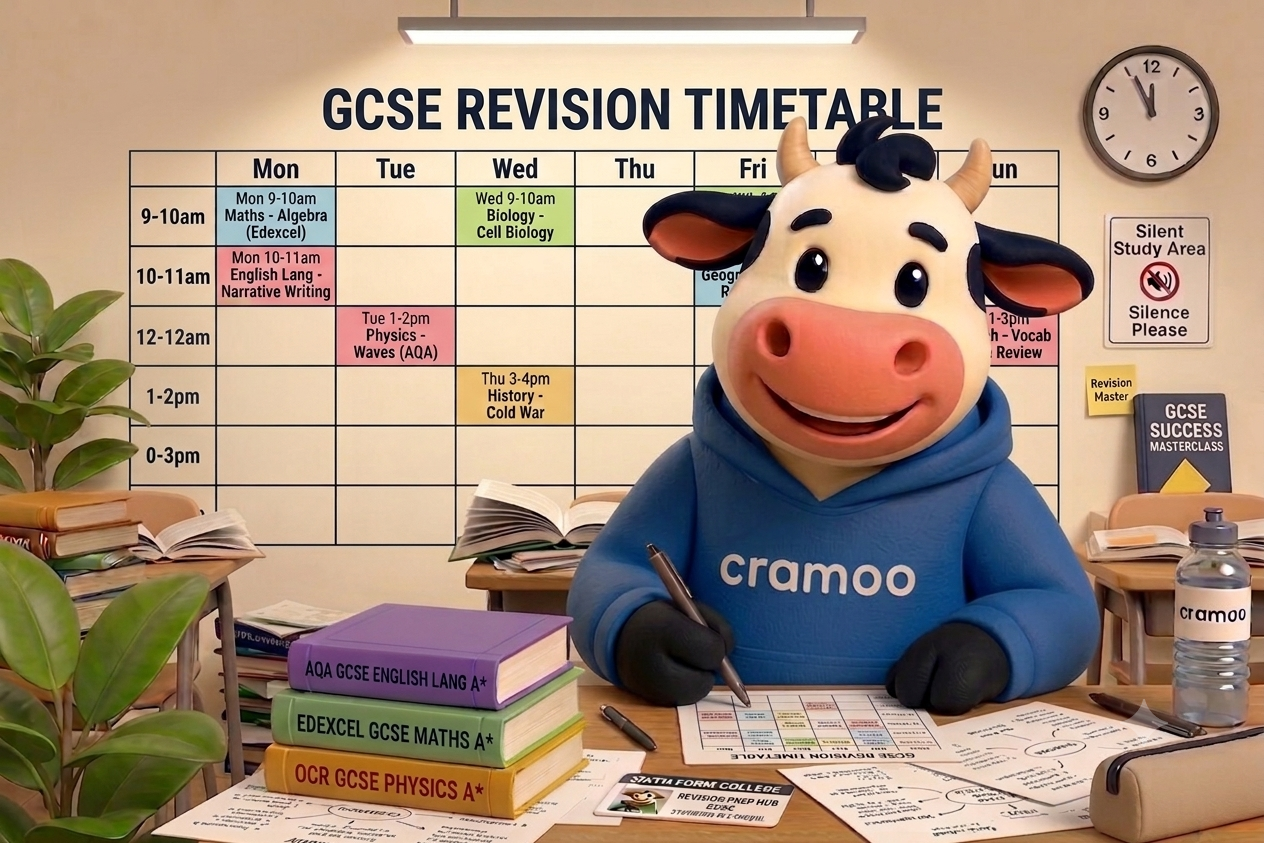
GCSE Revision Timetable
A GCSE revision timetable is more than just a calendar. It is a strategic plan that ensures you cover every topic before exam day while staying balanced and stress-free.
The Complete GCSE Revision Guide
Revision is not just about reading textbooks. This guide covers how to use active recall, past papers, and effective planning to ace your GCSE exams.
How to Revise for GCSE Exams
Learn how to revise for GCSE exams using evidence-based techniques like active recall and spaced repetition to improve memory retention and boost your grades.