
How Much Should You Revise for A-Levels?
How many hours of A-Level revision you actually need per day in term time, the holidays and study leave.
How Much Should You Revise for A-Levels?
Most teachers suggest two to three hours of focused revision per day during term time in Year 13, rising to four to five hours a day in the holidays and study leave. But the honest answer is that the number of hours matters far less than what happens inside them — and a great deal less than how early you start.
The Realistic Numbers
As a working guide:
- Year 12, term time: 45–90 minutes a day, mostly consolidating that day's lessons and keeping flashcards ticking over.
- Year 13, autumn and winter: 1.5–2.5 hours a day, plus longer weekend blocks around mocks.
- Year 13, spring term: 2–3 hours a day, with one timed past paper per subject each week.
- Easter holidays: 4–5 focused hours a day, with at least one full day off a week.
- Study leave: 4–6 hours a day, structured around the exam timetable rather than by subject.
Anything beyond about five hours in a day produces sharply diminishing returns for almost everyone. Fatigue makes revision passive, and passive revision does not work.
Why Quality Beats Quantity
Two hours of active recall and timed questions will beat five hours of rereading notes with your phone face-up beside you. The evidence on this is unusually clear: effortful retrieval builds durable memory, and comfortable review does not.
A useful test at the end of a session: what could you produce from memory that you could not produce beforehand? If the answer is "nothing, but I read a lot", the hours did not count.
Our guide to how to revise for A-Level exams covers the techniques that make hours productive.
Start Earlier, Revise Less Later
Students who begin building flashcards in September of Year 13 typically revise fewer total hours in May than students who start at Easter, and score higher. That is not willpower — it is spacing. Reviewing a topic five times across six months takes less total time than cramming it three times in three weeks, and it sticks.
Ten minutes of flashcard review every morning across a school year is roughly 30 hours of spaced retrieval practice for almost no felt effort. Upload your notes to Cramoo and it will build the decks and schedule the reviews for you.
Hours Per Subject
Divide by need, not equally. A rough allocation:
- 40% of your time on your weakest subject or the one furthest from your target grade
- 35% on your middle subject
- 25% on your strongest
Revisit this split every few weeks based on past-paper marks, not on how you feel about each subject. Use the A-Level Revision Checklist to keep the picture honest.
What a Good Two Hours Looks Like
- 0–10 min: flashcard review of yesterday's cards.
- 10–50 min: one red topic — blurt what you know, fill the gaps, make cards.
- 50–60 min: break, away from your desk and your phone.
- 60–100 min: past-paper questions on a topic you covered last week, timed.
- 100–115 min: mark them against the official mark scheme and log why you lost each mark.
That is two hours which produces measurable change. Five hours of highlighting does not.
Signs You Are Doing Too Much
Overwork is real and it costs grades. Watch for:
- revising past 11pm regularly, then struggling to concentrate the next day
- no full day off in a fortnight
- skipping meals, sport or seeing friends to fit revision in
- rising anxiety with falling past-paper scores
If two or more apply, cut your hours and protect sleep. Memory consolidates overnight; a seven-hour night plus two focused hours beats five hours of revision on five hours' sleep every time.
Signs You Are Doing Too Little
- You cannot say what you will revise tonight without opening a folder to decide.
- Whole specification points are still red in March.
- You have not sat a full timed paper in any subject.
- Your revision consists of reading notes and watching videos.
The fix is structural, not motivational: build the checklist, build the timetable, and start with ten minutes a day. See A-Level Revision Timetable.
Do Not Forget Breaks
Work in 40–50 minute blocks with real breaks — standing up, leaving the room, no scrolling. Take one evening and one longer stretch off each week. Students who plan rest deliberately are the ones still functioning in mid-June, when three papers in four days is a genuine endurance test. Check where those clusters fall in A-Level Exam Dates 2026.
The Honest Bottom Line
There is no magic number. Two focused, well-structured hours a day from the start of Year 13, rising to four or five in the holidays, is enough to reach top grades in three A-Levels for most students. What you cannot substitute for is starting early, testing yourself rather than rereading, and doing timed past papers.
Begin tonight: pick your weakest topic, turn it into flashcards with Cramoo, and review them tomorrow morning for ten minutes. Then browse the A-Level hub for subject-specific guides.
Frequently asked questions
Related reading
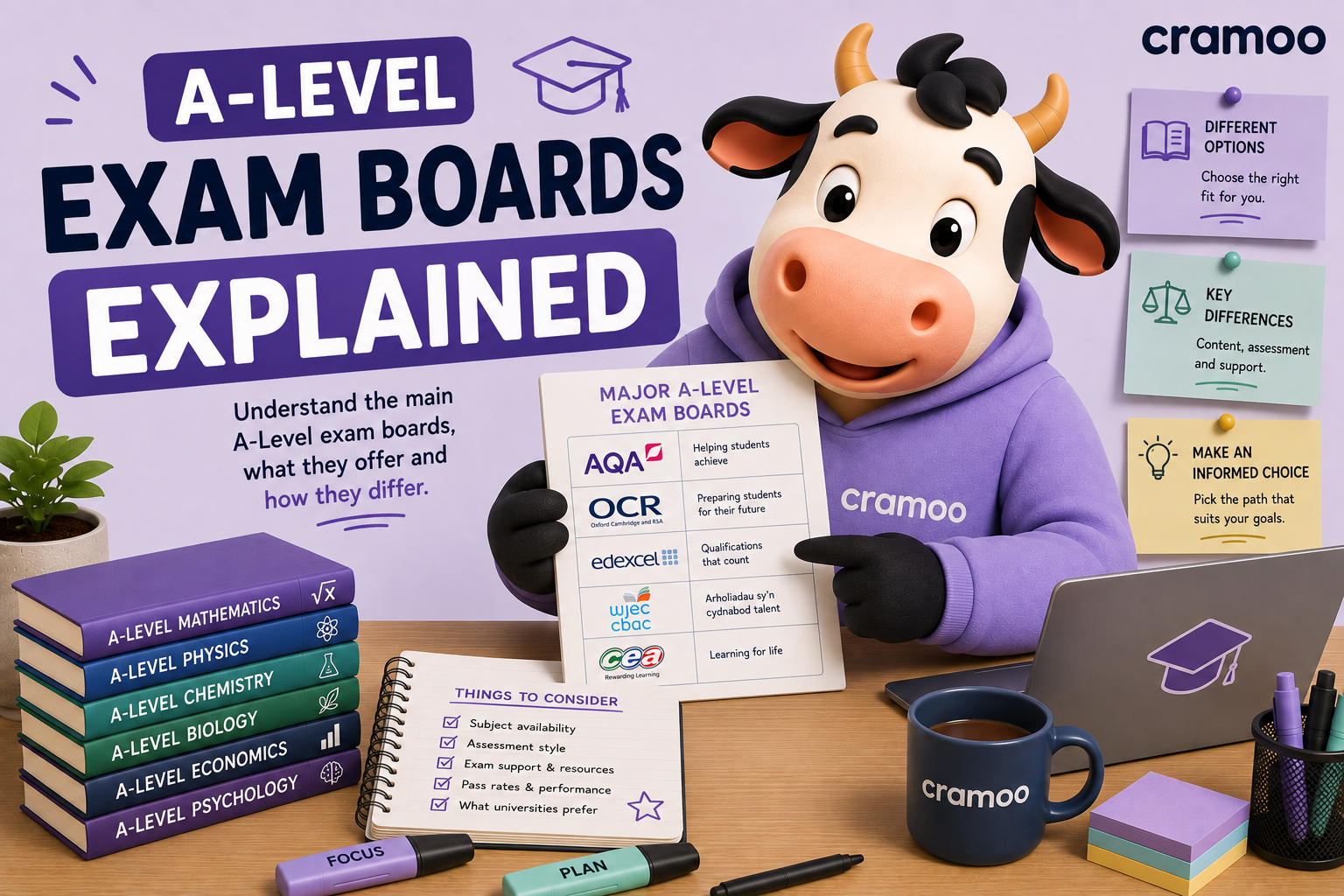
A-Level Exam Boards Explained
Which board you sit changes your specification, papers and mark schemes. Here is how to find out and why it matters.
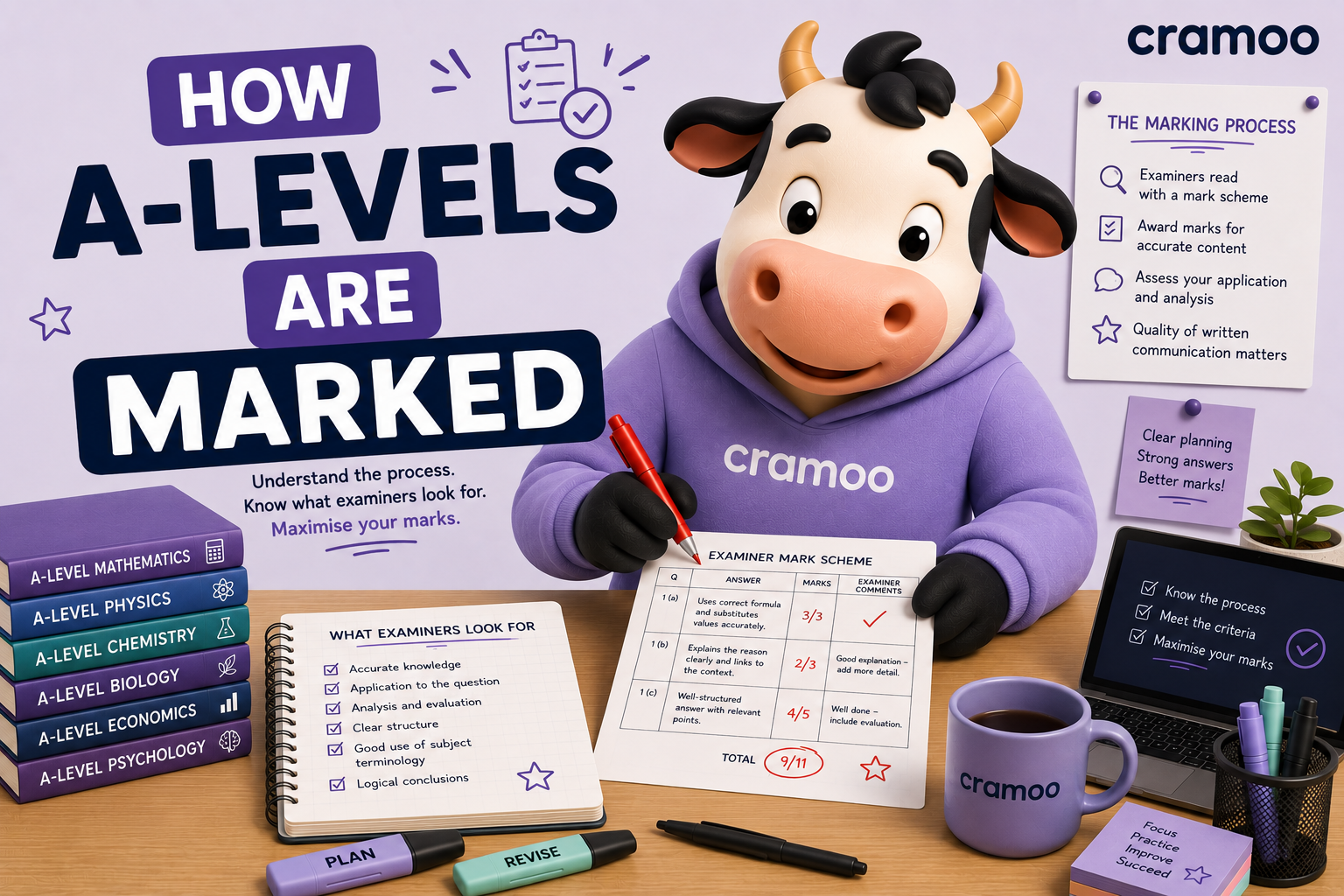
How A-Levels Are Marked
How your script is scanned, split between examiners, standardised and moderated, and what that means for how you should write answers.
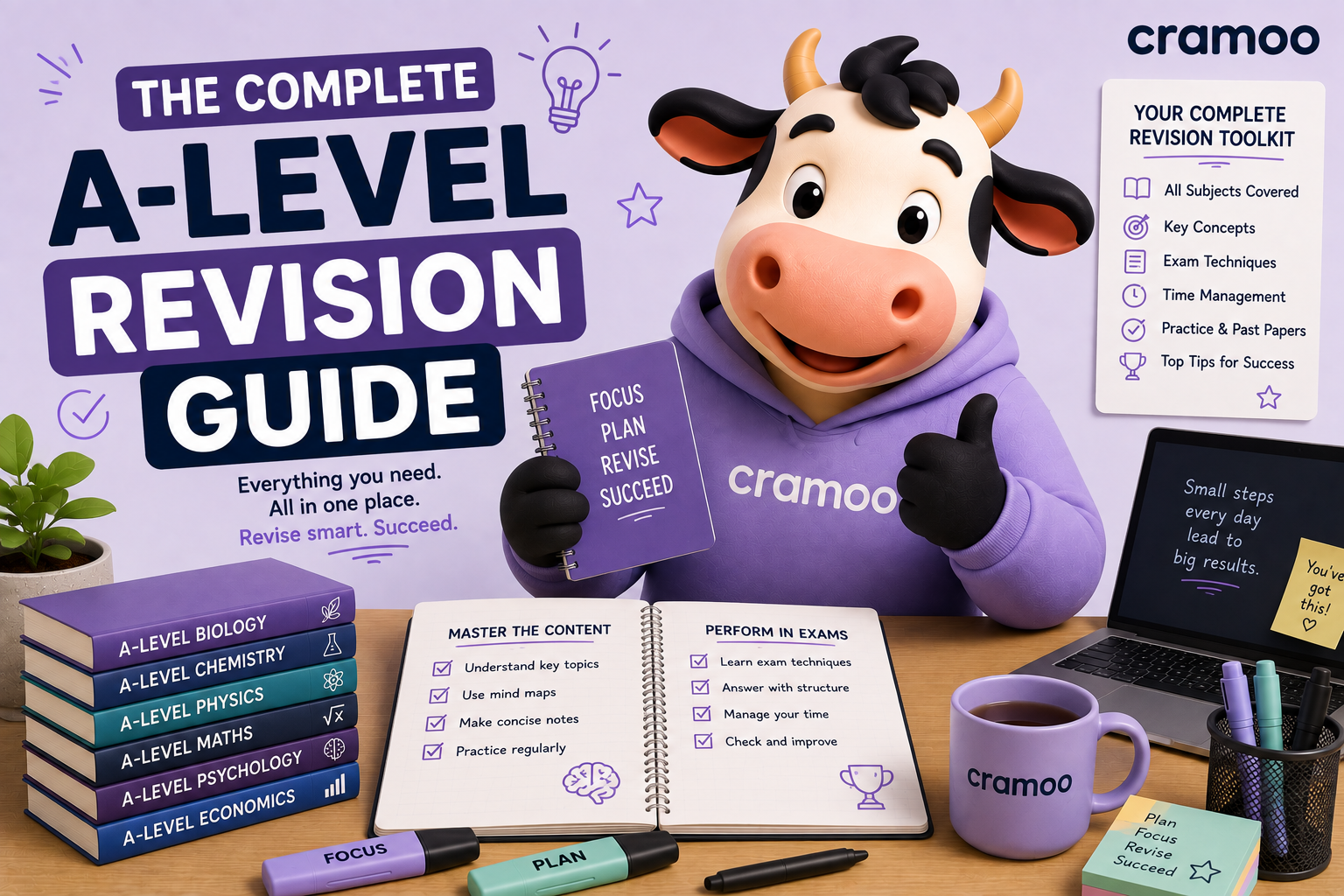
The Complete A-Level Revision Guide
Everything you need to revise for A-Levels: how to plan, which techniques actually work, how many hours to do, and how the exams are marked.
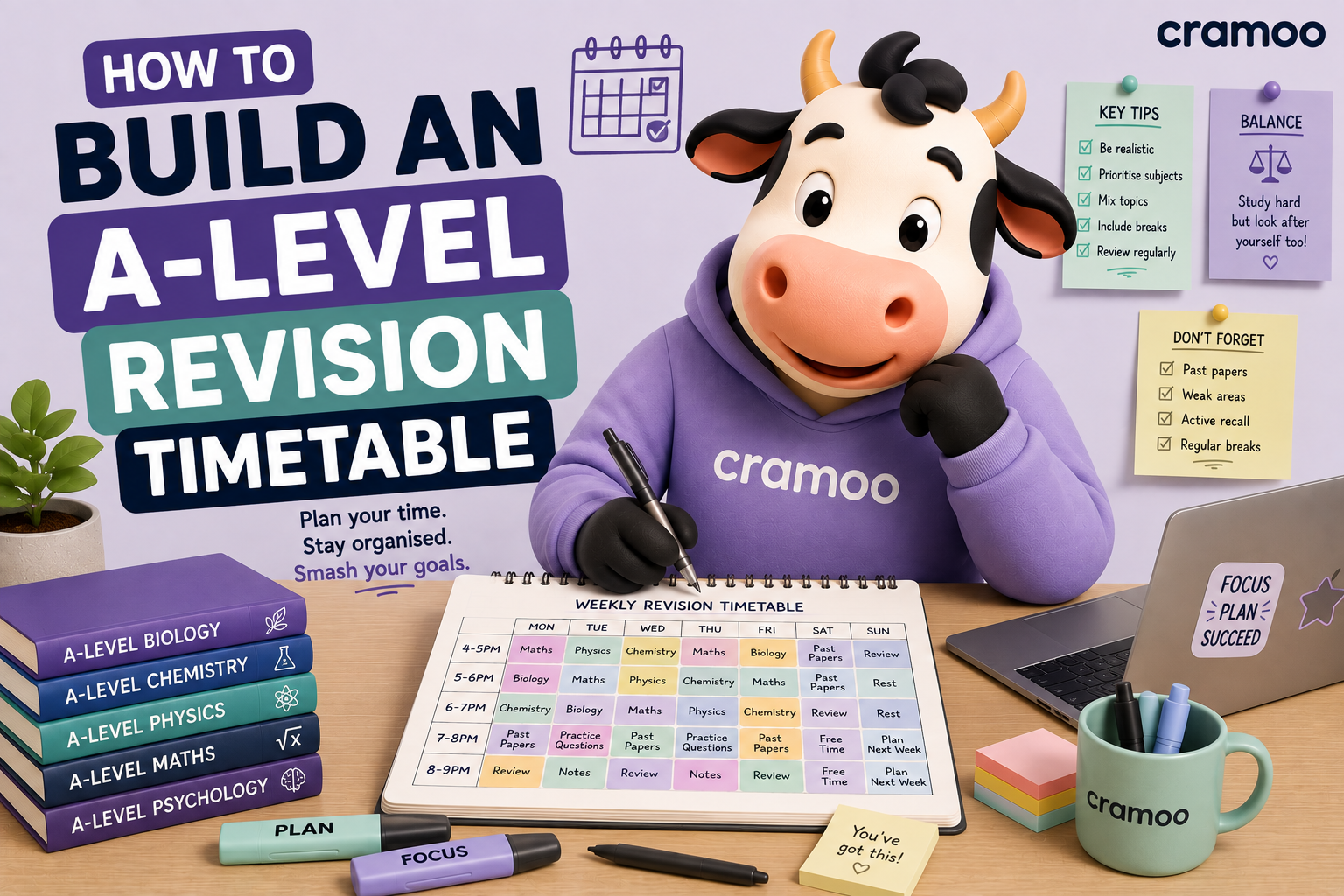
How to Build an A-Level Revision Timetable
A step-by-step method for building a realistic A-Level revision timetable you will actually follow.