
The Complete A-Level Revision Guide
Everything you need to revise for A-Levels: how to plan, which techniques actually work, how many hours to do, and how the exams are marked.
A-Levels are a step change from GCSE. You study fewer subjects, but each one goes far deeper, expects independent thinking, and rewards students who can apply knowledge rather than simply recall it. That shift catches a lot of people out in Year 12, and it is the single biggest reason strong GCSE students sometimes struggle with their first A-Level mocks.
This guide pulls together everything you need to revise properly for A-Levels: how to plan your time, which techniques actually move grades, how to use past papers well, and how to stay sane through an exam season that runs from May into late June.
Why A-Level Revision Is Different
At GCSE, you can often get a strong grade by memorising content and presenting it neatly. At A-Level, the mark schemes reward analysis, evaluation, and application. Examiners are looking for whether you can take a principle you have learned and use it in an unfamiliar context.
Three practical consequences follow from that:
- Content coverage is not enough. You need to practise applying each topic to new scenarios, not just recite it.
- Specifications matter more. A-Level specifications are long and very specific about which skills are assessed. Reading yours is genuinely revision.
- Depth beats breadth in a session. One topic understood properly is worth more than five topics skimmed.
Start With the Specification
Download the specification for each of your subjects from your exam board and turn it into a checklist. Every bullet point in that document is something the examiner is allowed to ask you about, so it is the only truly complete list of what you need to know.
Traffic-light each point: green for confident, amber for shaky, red for no idea. Your revision plan then writes itself, because you always know what to work on next. Our A-Level Revision Checklist walks through how to build this properly.
Build a Realistic Timetable
Most students who "fall behind" have not run out of time — they have run out of structure. A workable A-Level plan starts early, uses short focused blocks, and repeats topics rather than covering them once.
- Work in 40–50 minute blocks with 10 minute breaks.
- Cover two or three subjects per day rather than one subject all day.
- Book in one full past-paper session per subject each week from Easter onwards.
- Leave one evening a week completely free. Recovery is part of the plan.
If you want a template you can copy, see our guide to building an A-Level Revision Timetable, and if you are unsure how many hours are sensible, read How Much Should You Revise for A-Levels?
The Techniques That Actually Work
Decades of cognitive science research point in the same direction: revision works when it is effortful. Rereading notes and highlighting feel productive because they are comfortable, but they do very little for long-term recall.
Active recall
Close the book and force your brain to retrieve the information. Write everything you know about a topic on a blank page, then check it against your notes and fill the gaps in a different colour. The gaps are your revision list.
Spaced repetition
Revisit a topic just as you are starting to forget it — after a day, then three days, then a week, then a fortnight. This is exactly what flashcards are designed for, and it is why students who make cards early in Year 12 find Year 13 far less stressful. You can turn your class notes into a deck automatically with Cramoo and let the review schedule handle the timing.
Interleaving
Mix topics within a session instead of blocking them. Doing three mechanics questions, then three pure maths questions, then three statistics questions is harder than doing nine of the same — and that difficulty is exactly what builds flexible knowledge.
Past-paper practice under timed conditions
This is the highest-value activity in the final six weeks. Do the paper to time, mark it against the official mark scheme, and log every mark you dropped and why.
Subject-Specific Approaches
Essay subjects and calculation subjects need different revision diets.
- Maths and Further Maths: volume of questions, not notes. Work through past questions by topic, then whole papers. See our A-Level Maths hub.
- Sciences: learn the definitions word-perfectly, then drill six-mark application questions and required practicals. Start with Biology, Chemistry and Physics.
- Essay subjects: build a bank of examples, quotations, or case studies, then practise planning essays in five minutes. Ten good plans beat two full essays.
- Psychology and Economics: evaluation is where the marks live. For every study or model, learn two strengths and two limitations. Try the Psychology and Economics hubs.
Use Mark Schemes Like a Cheat Sheet
Mark schemes tell you exactly which words earn marks. Read three or four for the same question type and you will start to see the pattern: the command word, the number of distinct points required, and the vocabulary the examiner expects.
Mark your own work harshly. If the scheme wanted a specific term and you wrote a synonym, do not award yourself the mark — that is how you learn what the examiner will actually accept. Our guide to How A-Levels Are Marked explains the process behind those documents.
Know Your Exam Board and Dates
AQA, Edexcel, OCR, WJEC/Eduqas and CIE all assess the same subjects differently. Using the wrong board's past papers is one of the most common revision mistakes at A-Level. Check with your teacher, then read A-Level Exam Boards Explained.
Put every exam date in one calendar as soon as your provisional timetable is published so you can see where the pressure points fall — our A-Level Exam Dates 2026 guide has the key dates.
Looking After Yourself
Sleep is not the enemy of revision; it is when memory consolidation happens. Protect seven to nine hours, get outside once a day, and eat something before an exam even if you feel sick with nerves.
If your workload feels genuinely unmanageable, tell someone early — a tutor, a head of year, or your parents. Adjusting a plan in March is easy. Adjusting it in June is not.
Your Next Steps
- Download all your specifications and traffic-light them this week.
- Build a timetable that repeats topics rather than covering them once.
- Convert your first amber topic into flashcards and start reviewing daily.
- Book a timed past paper for every subject in the next fortnight.
Do those four things consistently and A-Level revision stops being a mountain and becomes a routine. Start by turning one set of notes into a deck with Cramoo and revise it for ten minutes a day.
In this guide
The complete cluster of supporting articles for this topic.
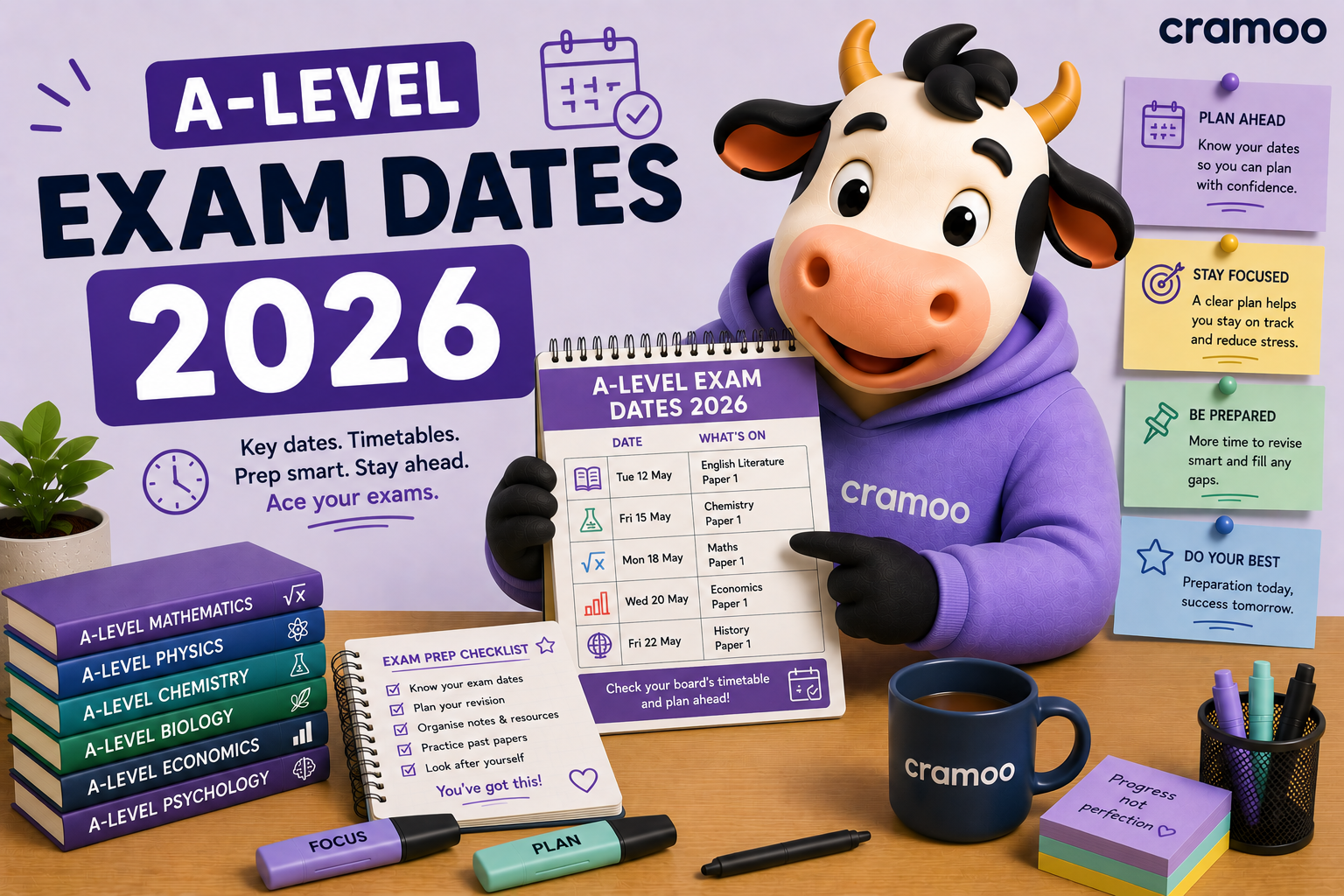
A-Level Exam Dates 2026
A-Level exams in 2026 are expected to run from mid-May to late June, with Results Day on Thursday 13 August 2026.
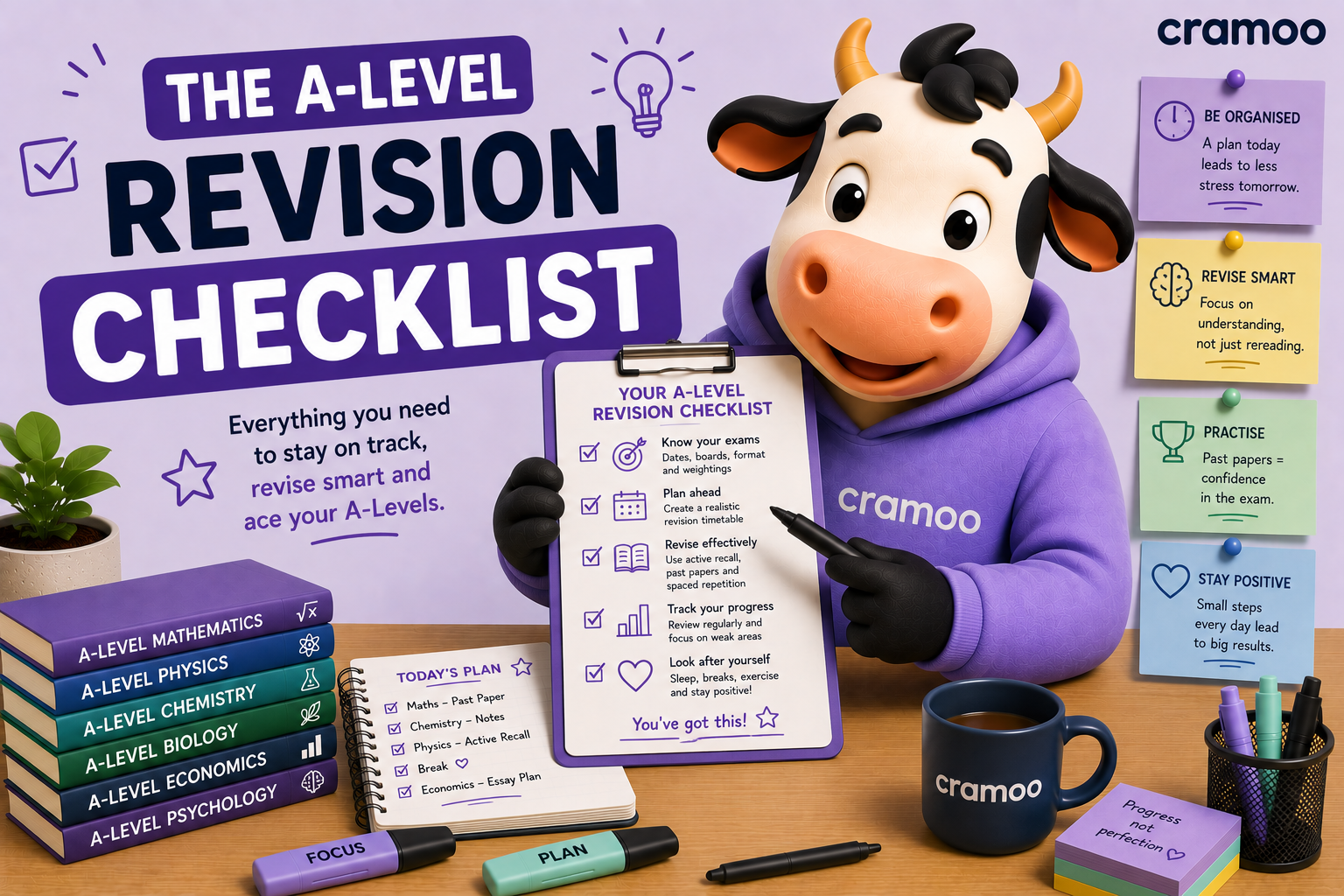
The A-Level Revision Checklist
Turn a 60-page specification into a list of finishable jobs with this A-Level revision checklist.
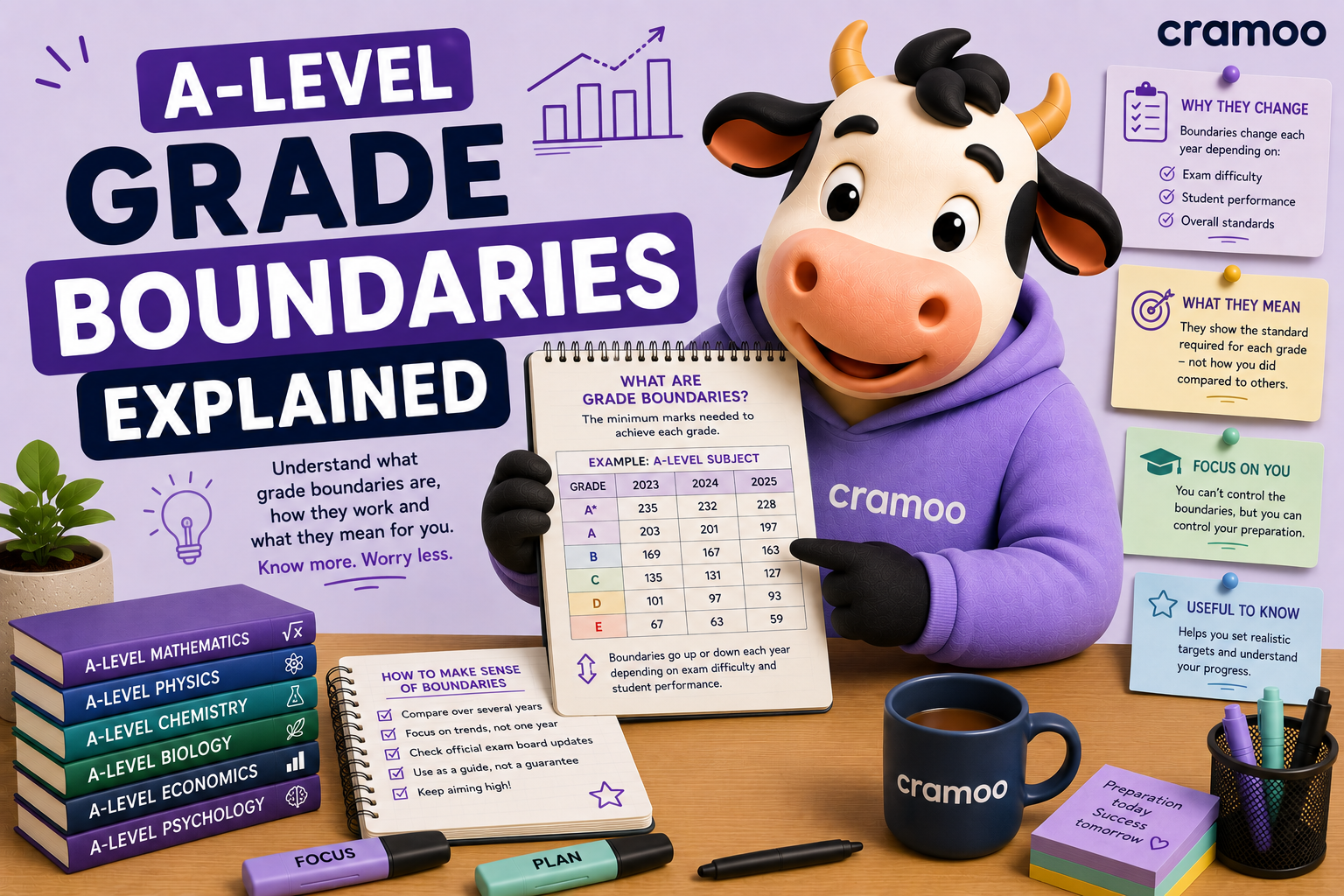
A-Level Grade Boundaries Explained
Why there is no fixed percentage for an A*, how boundaries are set each year, and how to use them when marking past papers.
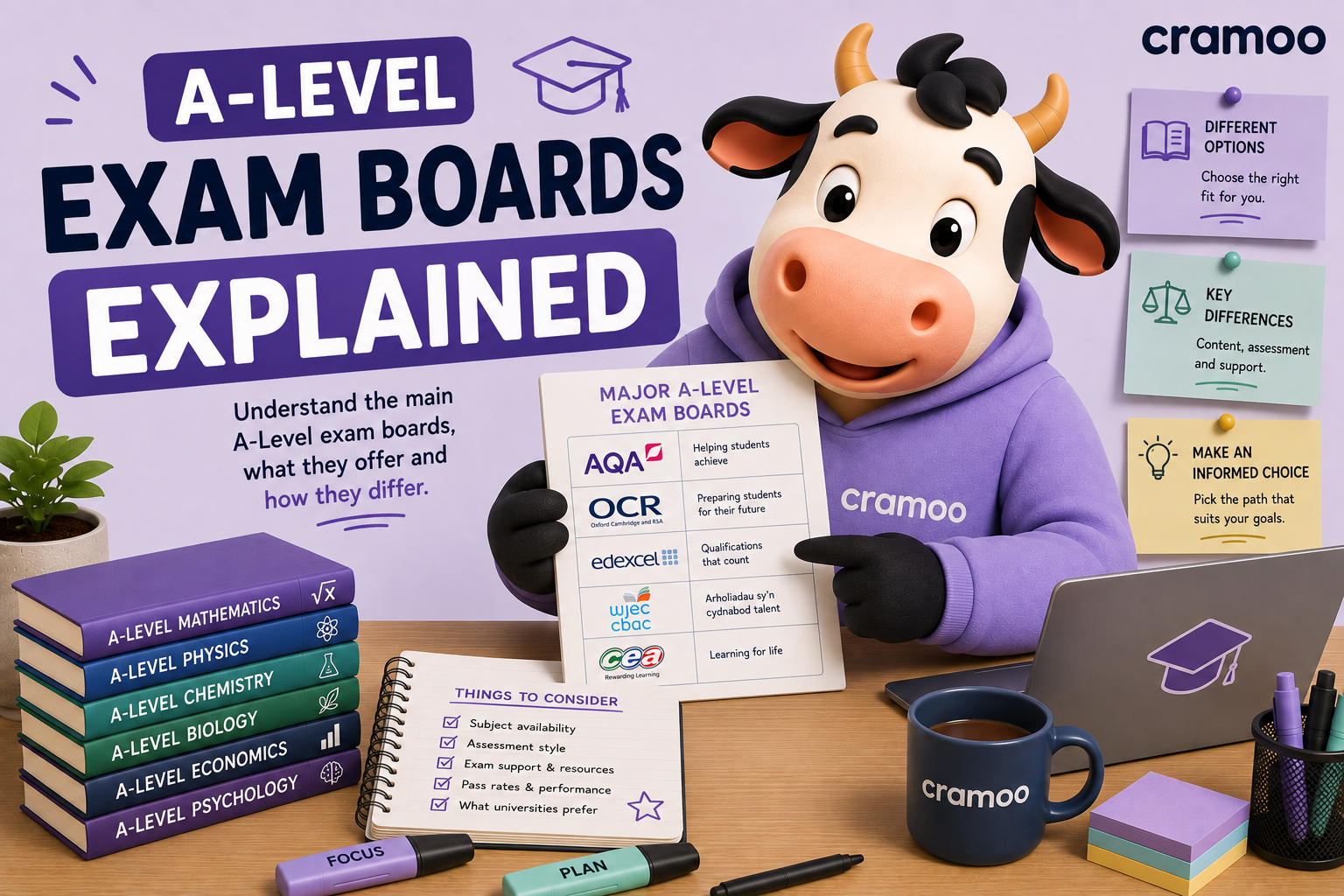
A-Level Exam Boards Explained
Which board you sit changes your specification, papers and mark schemes. Here is how to find out and why it matters.
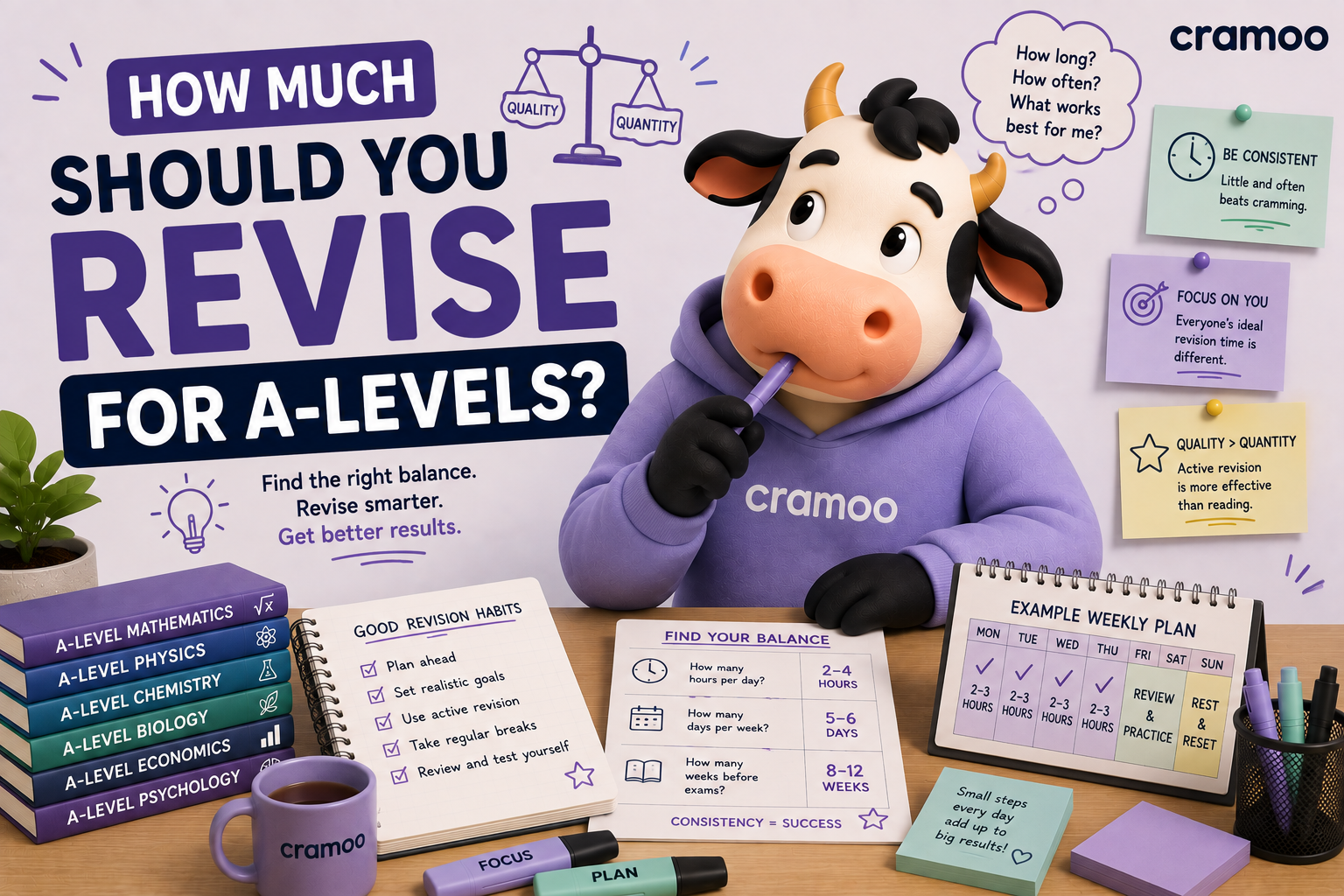
How Much Should You Revise for A-Levels?
How many hours of A-Level revision you actually need per day in term time, the holidays and study leave.
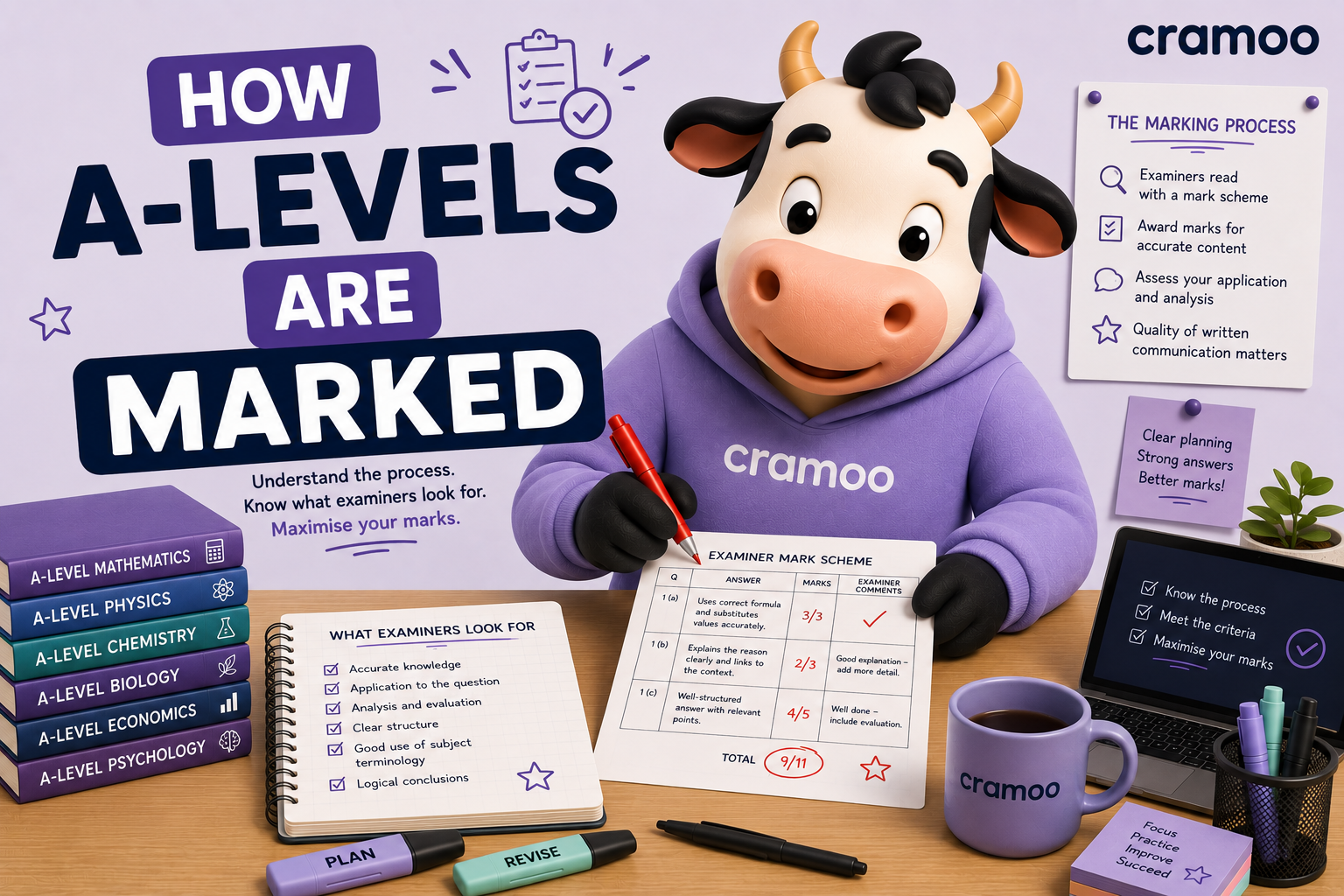
How A-Levels Are Marked
How your script is scanned, split between examiners, standardised and moderated, and what that means for how you should write answers.
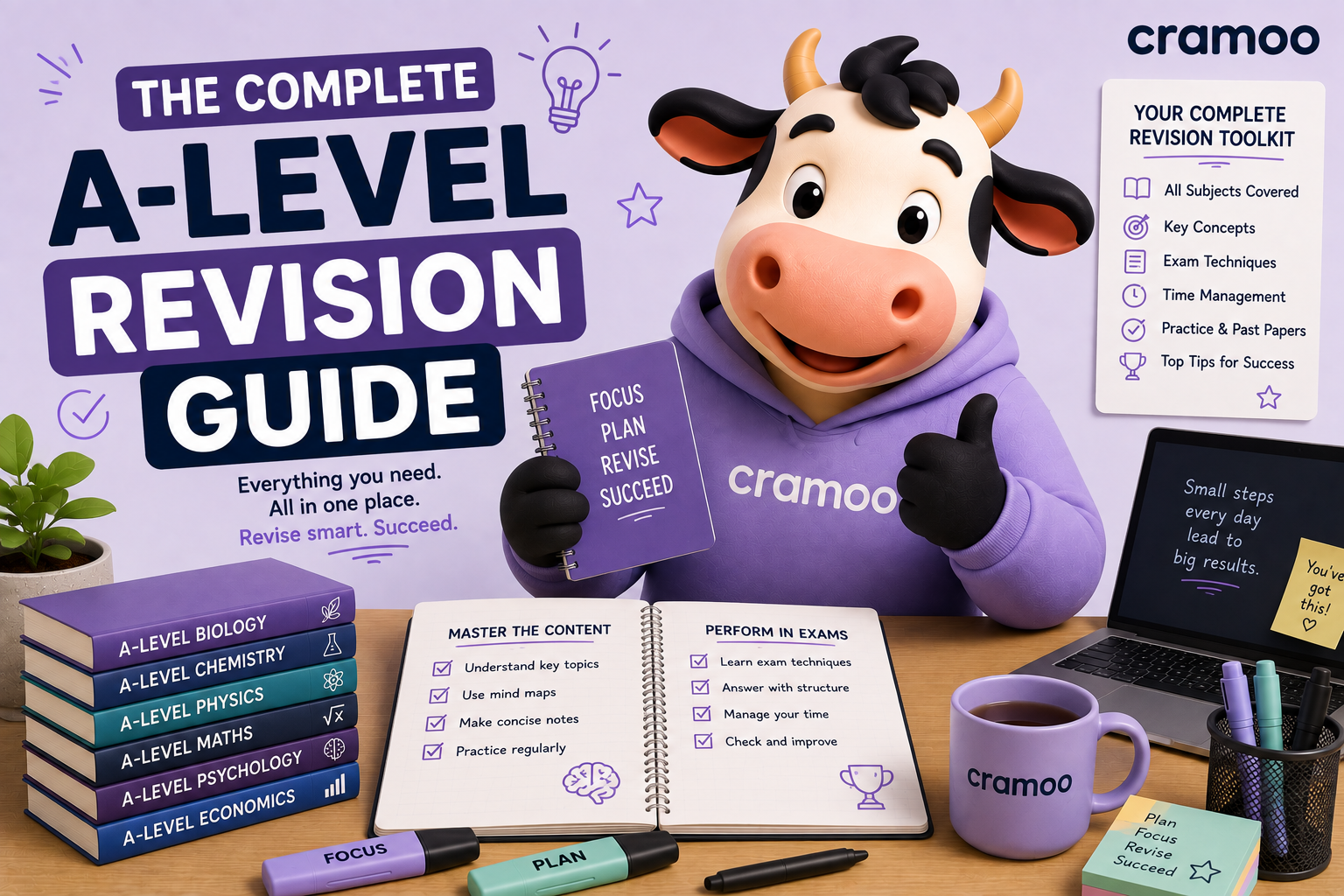
The Complete A-Level Revision Guide
Everything you need to revise for A-Levels: how to plan, which techniques actually work, how many hours to do, and how the exams are marked.
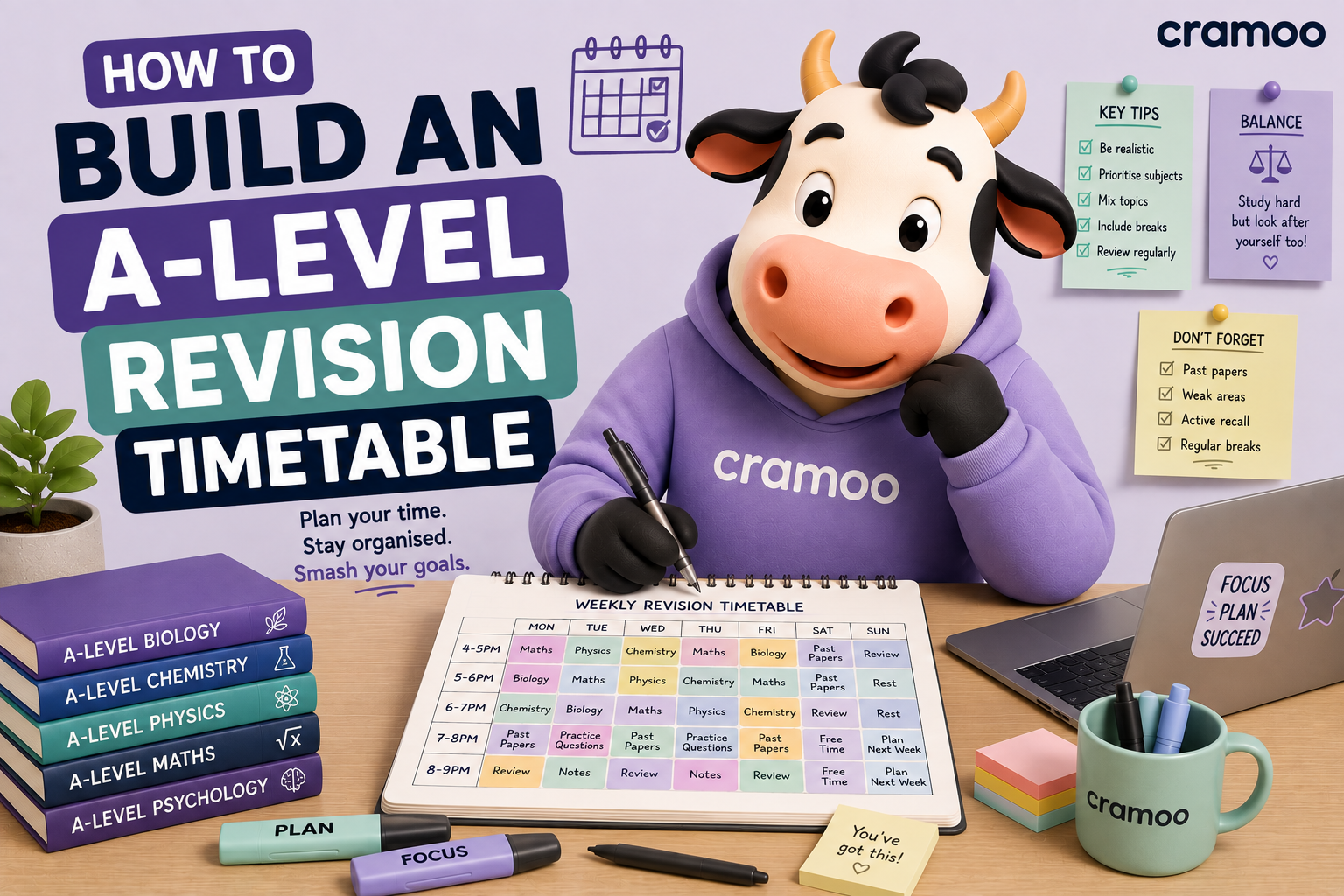
How to Build an A-Level Revision Timetable
A step-by-step method for building a realistic A-Level revision timetable you will actually follow.
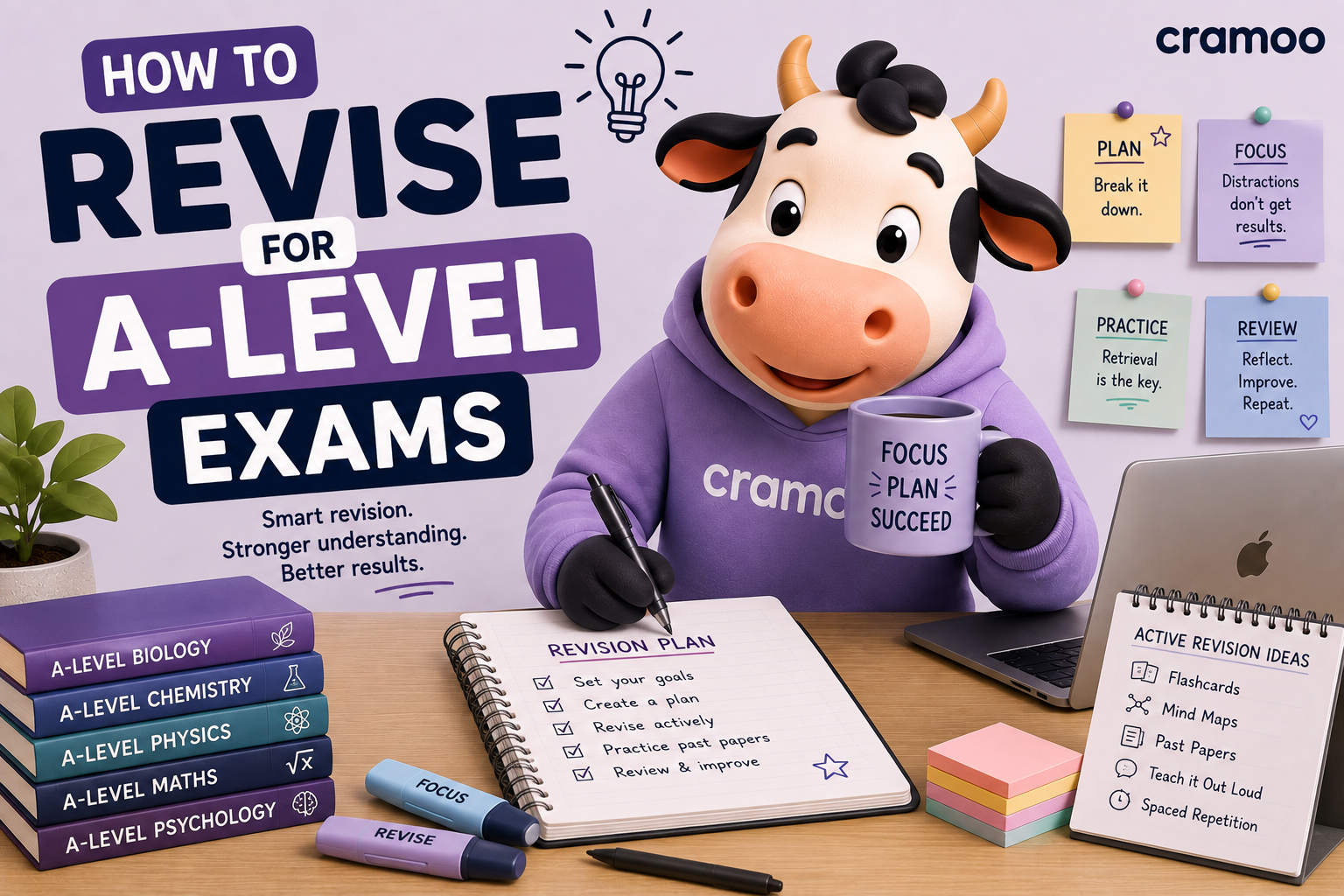
How to Revise for A-Level Exams
The revision techniques that actually work at A-Level, and the comfortable ones that quietly waste your time.
Frequently asked questions
Related reading
A-Level Exam Dates 2026
A-Level exams in 2026 are expected to run from mid-May to late June, with Results Day on Thursday 13 August 2026.
The A-Level Revision Checklist
Turn a 60-page specification into a list of finishable jobs with this A-Level revision checklist.
A-Level Grade Boundaries Explained
Why there is no fixed percentage for an A*, how boundaries are set each year, and how to use them when marking past papers.
A-Level Exam Boards Explained
Which board you sit changes your specification, papers and mark schemes. Here is how to find out and why it matters.